Before you sit down
The story so far
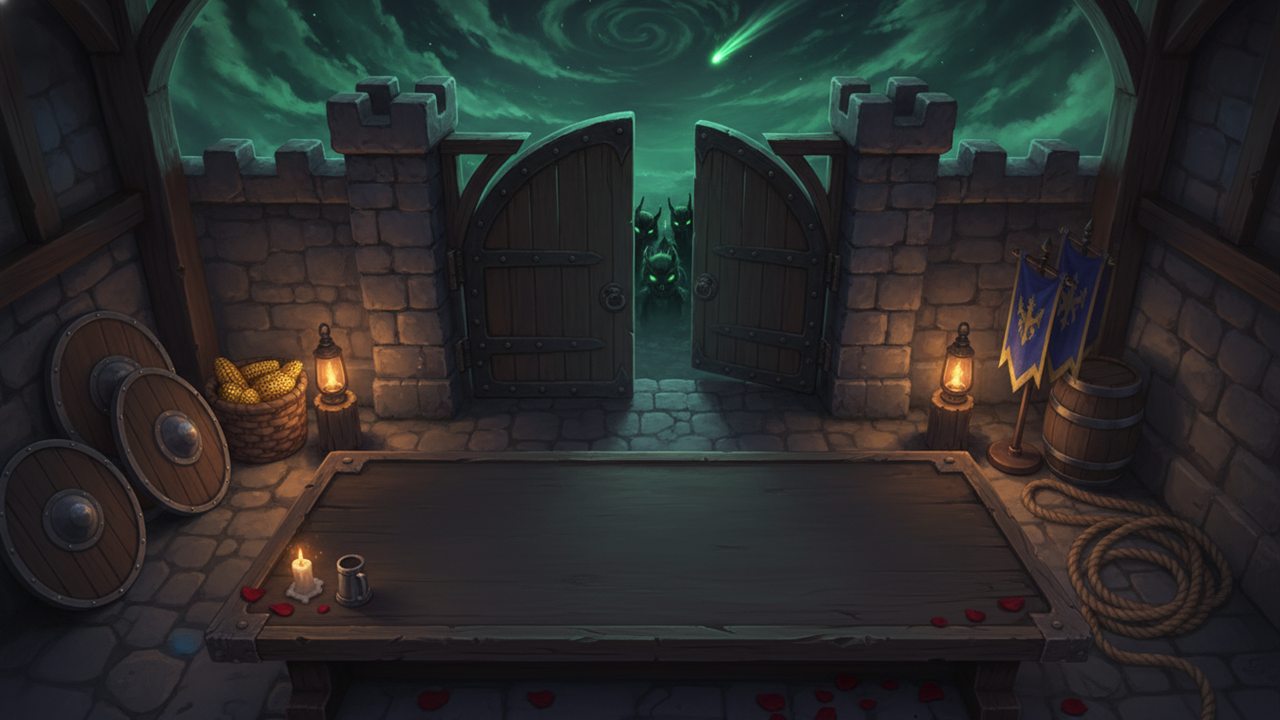
One village, one road, one gate at the end of it. The ten gods who took the rest of the world want in. They are not allowed to break it down. They are allowed to play for it.
 The Gate
Shadows of the Corn
The Rulebook
Nightmares are at the Gate. Can you hold the gate?
Every rule of the table, with tips, for the Herd and the Horde, online and at a kitchen table.
Inside
Before you sit down
One village, one road, one gate at the end of it. The ten gods who took the rest of the world want in. They are not allowed to break it down. They are allowed to play for it.
Chapter one
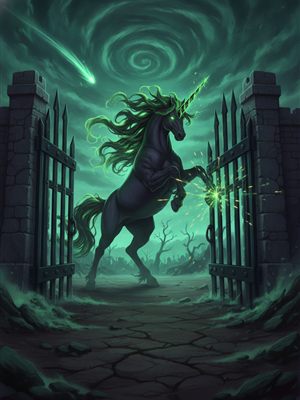
Two gates face each other across a table in the gatehouse. You hold one and your rival holds the other, and each starts at 20. Break your rival's gate before they break yours.
In the game the Herd holds the village gate against a Nightmare god, a ghost of another player's deck, or a player sworn to the Horde, who sits in the god's chair and plays the god's deck. At a kitchen table, two players each bring a deck.
A match lasts at most 30 turns each. If both gates still stand then, the higher gate wins.
Chapter two
A deck holds 40 to 60 cards, all of one side: Unicorn cards in a Unicorn deck, Shadow cards in a Shadow deck.
Every player has the free core deck: 40 cards, 10 of them Fields. Core cards never burn and never leave you. More cards come from winning, pulls, merges and foil packs (see At the Gate online).
In the game the Deckbuilder checks every rule and says what is missing, and its two meters show how a deck leans: attack against defense, troops against magic.
Chapter three
Chapter four
Every turn runs the same five steps, in order. Only the fourth is yours to choose.
Each of your fields gains a charge token, up to 3. Your troops are ready to attack. A troop that venom has bitten takes 1.
Draw one card. A Hushed player skips it. From an empty deck you draw nothing and your gate takes 2 instead.
Add up what your fields pay: that is your energy for this turn. It never piles up from one turn to the next.
Plant one field, play cards, harvest, and attack with your ready troops, in any order, while your energy lasts.
Short spells wear off. A champion or war machine that neither attacked nor blocked charges one. Regrow heals, Conjure summons. A hand of more than 8 loses its oldest cards. The turn passes.
Energy you leave unspent stays up through your rival's turn, where it pays for reactions. Your next Energy step replaces it.
Chapter five
Chapter six
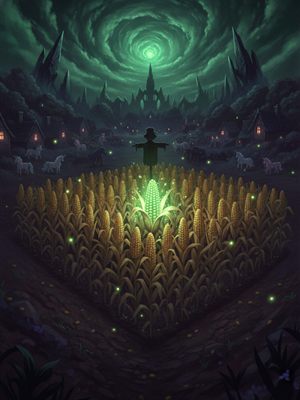
Fields are where energy comes from. You may plant one field a turn, free, and hold at most 6.
A field pays from your next turn. Its card shows three yields: what it pays while young, after it has lived 3 of your turns, and after 6. An old field is a rich one.
Charge and harvest. Each of your turns a field gains a charge token, up to 3. With 2 or more you may harvest it: pay as much energy as it has tokens, and each token rolls the field's harvest once. Online the harvest is real loot, yours win or lose; it does nothing to the fight itself.
Cards can make a field grow or wither, salt your rival's best field, or steal it for your own.
Chapter seven
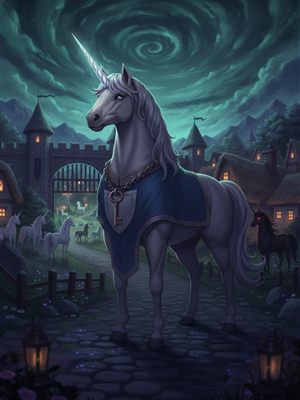
A troop costs energy and takes a place in your row, which holds 6. It waits until your next turn to attack, unless it has Charge.
Attacking. In your turn each ready troop may attack once: the enemy gate, or an enemy troop it can reach. A gate that is hit loses the attacker's attack. Troop against troop, they hit each other at once, each dealing its attack to the other.
Damage stays. A hurt troop stays hurt until something heals it, and at 0 health it falls.
Guard. While your rival has a guard that your ground troop could hit, your ground troops must attack a guard.
Flying. A flyer goes over the guards: it may attack the gate or any troop. A ground troop can never attack a flyer, and cannot block one.
Blocking. When your gate is attacked, you may put one of your troops in the way. Your troop and the attacker then trade blows as if your troop had been the target. A troop blocks once a turn.
Reactions. Whenever your rival attacks, you may answer with one reaction before the blow lands. Block first and then react, and a shield lands on your blocker.
Some auras reinforce a gate, so every hit on it is less, or make it bite the troops that hit it.
Chapter eight
Magic happens once, then goes to the grave.
An aura's effect stays for the rest of the match: a stronger troop, a reinforced gate, a field that grows.
An instant plays like magic in your own turn. One marked Reaction can also be played in your rival's turn, while they attack: one reaction for each attack. A reaction that only answers an attack (it blocks it, shields the defender or hurts the attacker) cannot be played in your own turn.
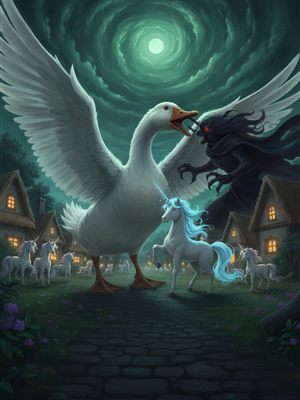
For the Herd, Goose! blocks an attack, Duck! shields the defender and Horn Flash burns the attacker. The "just because" cards do something good and something bad, on purpose.
Shields. A shield from a power waits on its troop until a hit uses it up. A reaction's shield covers only the attack it answers.
Chapter nine
This chapter is drawn from How to Play in the game.
Chapter ten
A keyword on a card's kind line is a rule in one word. These are the words the cards themselves use.
Chapter eleven
Chapter twelve
Chapter thirteen
Signed in, a match at the Gate is for keeps. These pages are How to Play's own.
Chapter fourteen
The Gate plays on paper too, with a deck from the print pack (How to Play, Print your deck).
A printed card is a paper copy for play at home. It is not a card in your collection: it is never minted, traded or played in the game.
Cute on both sides of the table. Ruthless in the middle.
Shadows of the Corn · The Gate · The Rulebook