The fields
Corn planted by lantern, rows watched through the night, every harvest shared out at the wall instead of guarded by one herd.
 Shadows of the Corn
The World
The Battle for the Last Bright Field
A green comet with no orbit. Ten gods riding it from world to world. One village under it that will not go dark.
I. Before the gods
Before the gods, the comet. It comes out of nowhere, and it does not circle any sun. It goes where they point it, from one solar system to the next, and every world that has seen it rise has seen ten shadows follow.
Over a world they mean to take, it stops and holds a steady orbit, hanging in the night sky like a second moon, rising and setting with the nights, which no true comet has ever done. It is up there tonight, green over the village wall. Look up from the square and you can see it, waiting for them to be finished here: a reminder of the terror of the gods it has brought.
II. Where they come from
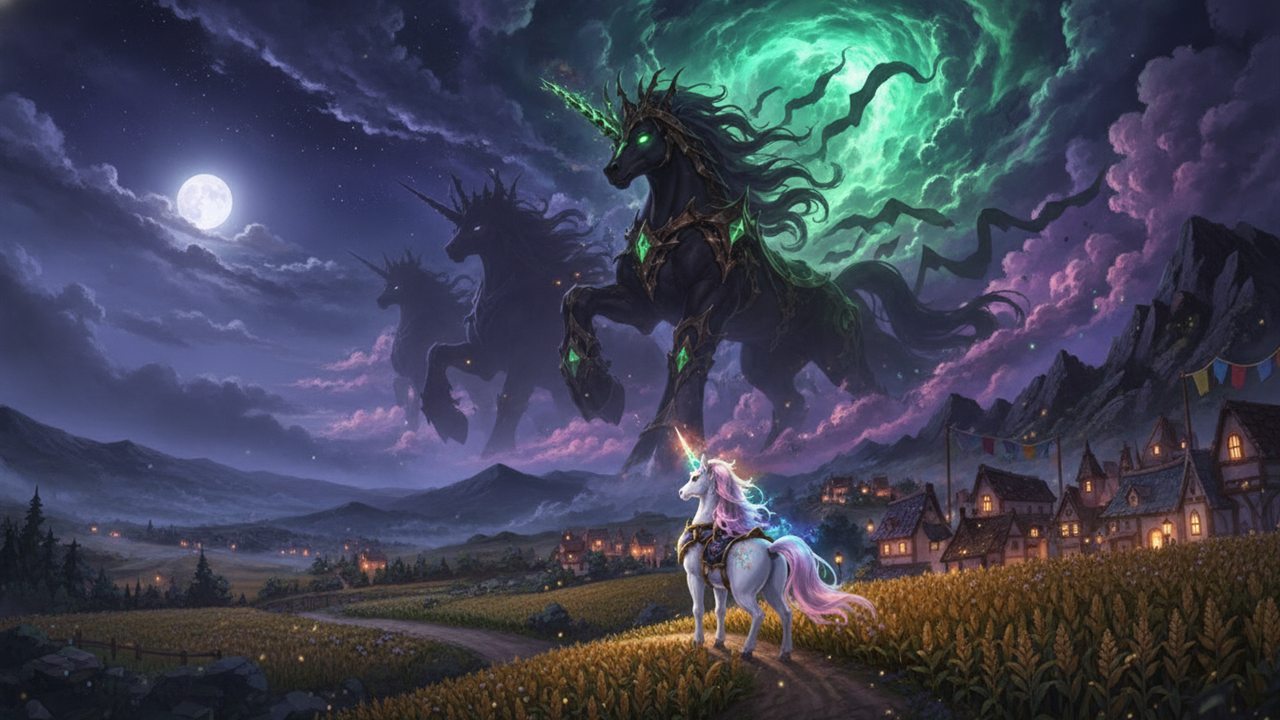
The Ten were not born here. On every world they reach, they take the shape of whoever lives there first, mocking that world by mimicking it, since they mean to be the last thing its people ever see. They are there to take everything, and to enjoy it before they end it.
Here, the first people were unicorns. So the Nightmares came as unicorns: four hooves, a horn, a mane like smoke, and nothing of a unicorn inside. God and unicorn, lacking good, lacking kindness: the wrong kind of both. The Ember Glutton says the last world tasted fine. It will not say what shape it wore there.
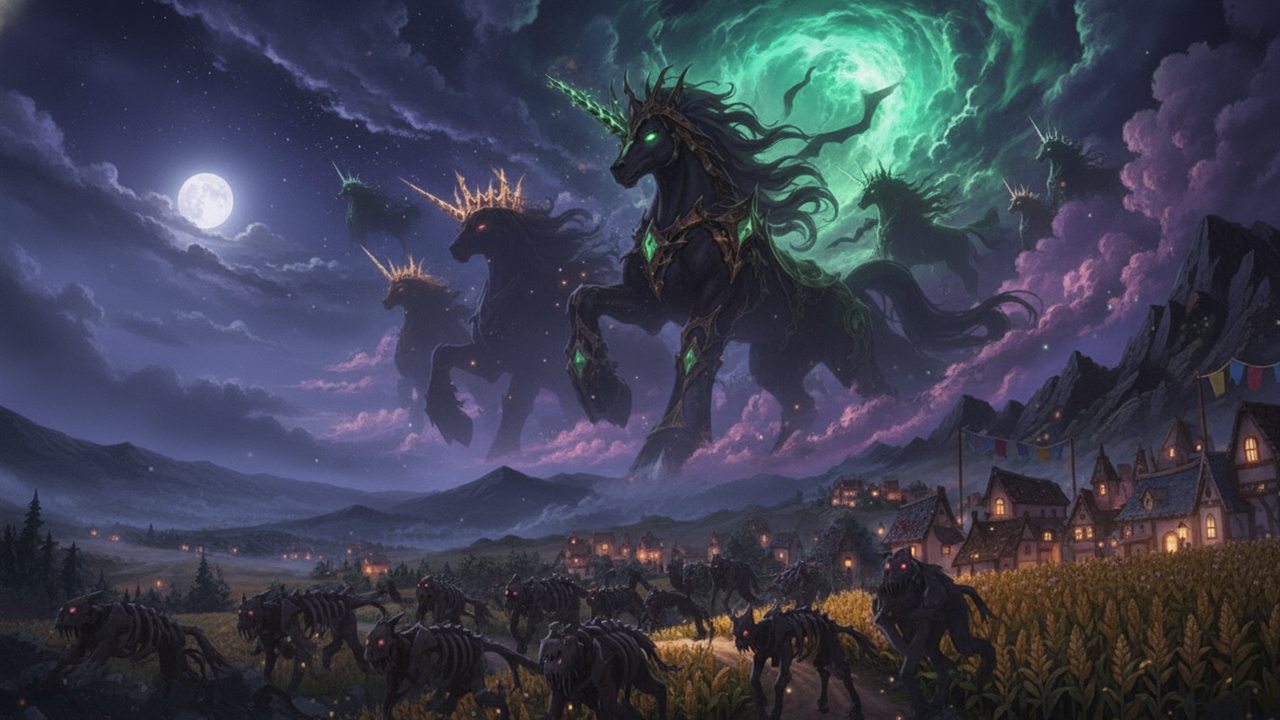
III. In the order they take it
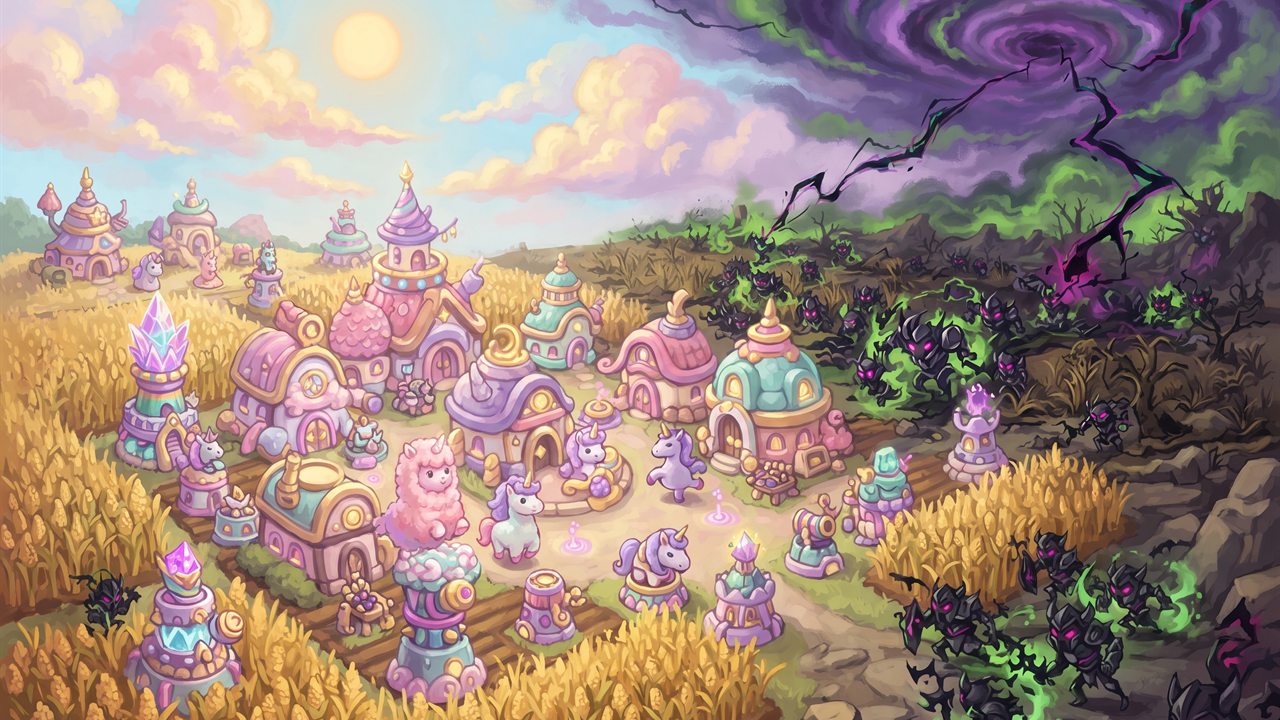
Pure joy. It lives in the life of the world itself, and here it shines out of the cornfields as light: that is what made a thousand fields bright. The Ten have never had any joy of their own, and they want this: the light in the corn, the power of the world. The herds met them on the fields, the hills and the ends of the world, and lost the largest battle anyone has ever lost, and the fields went dark one by one.
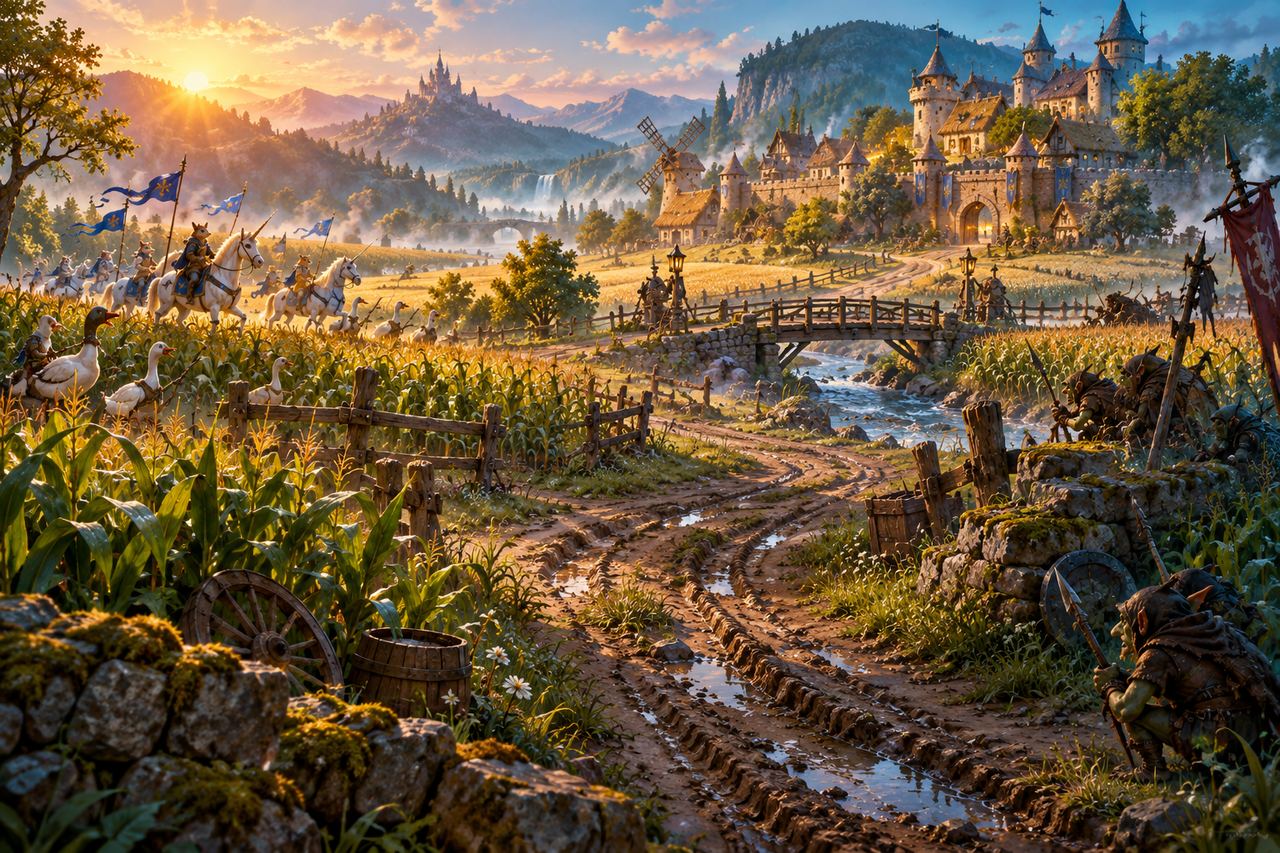
In the last fields the corn kept growing in the dark until it glowed, every ear holding a little of the light they missed. The Glutton wants to eat it, the Hush wants to own it, the Widow wants to see what it grows into.
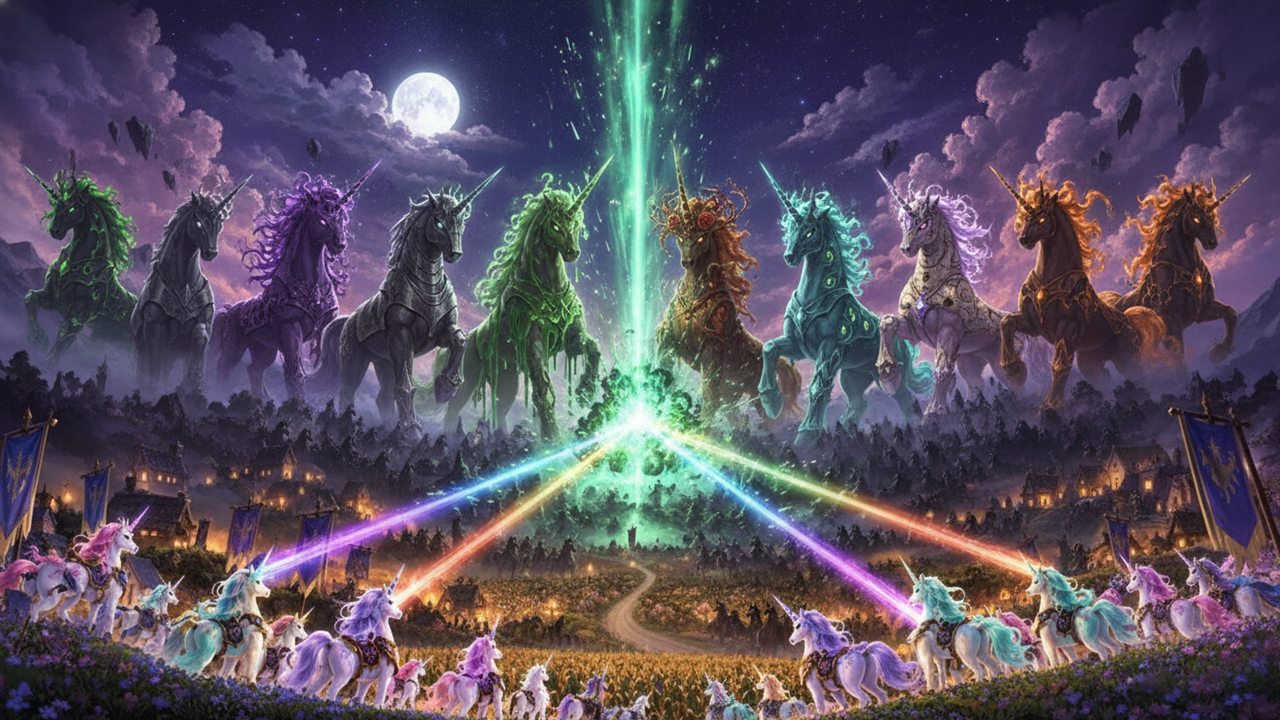
Then the horns, for their power. A unicorn's horn holds powers of its own, powers the Ten had never seen on any world before this one, and now they are hungry for them. Every horn taken is one the herd never gets back.
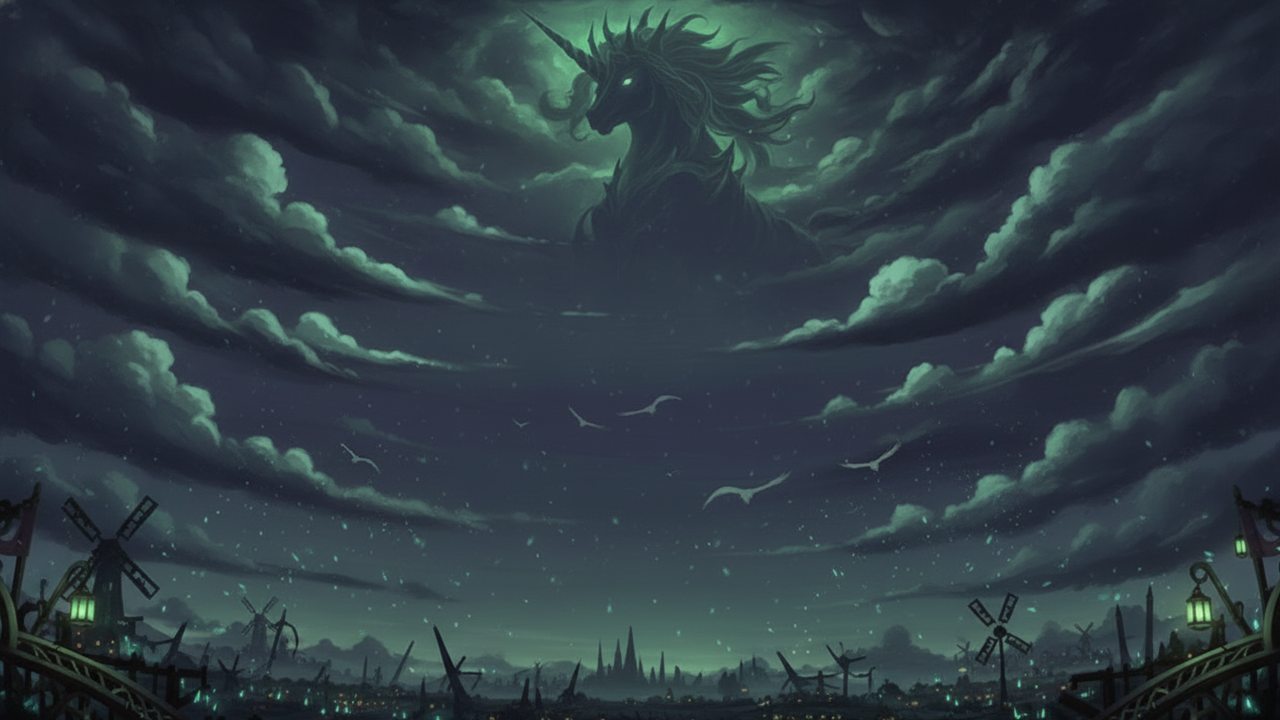
Then the world itself. When a world has nothing left to give, the comet moves on and the Ten go with it, and what stays behind is dark from pole to pole.
IV. Who rides the comet
Every wave on the road is sent by one of them, and every Horde player serves one. Open a god to read where it came from and what it wants.
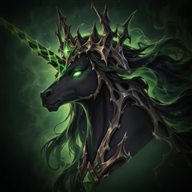 The Hollow SovereignWho Rules An Empty RoomMakes things by accident and then insists they were the plan.
The first of the ten to notice the village, and the least impressed by it. Before there was a Hollow Sovereign there was, by its own account, a room, and the room was perfect, and then something happened to it, and the Sovereign has ruled the empty version ever since and insists that was always the plan. It does not remember making most of its army; they happen the way a bored unicorn shreds a hay bale without looking, absent-mindedly, more than once. Its actual goal is almost restful next to the other nine: it wants the village emptied, quietly, the way its own room got emptied, and it would honestly rather you left on your own than make it deal with a whole invasion. It sends heralds instead of arriving itself, because showing up in the flesh is for god-unicorns who have not delegated properly, and because, though it would never say this part out loud, it has not left that room in longer than it can remember, and is not entirely sure it still can.
 The Swarm-MotherWho Is Always Already HereDoes not send soldiers. Sends rumours with teeth.
She does not have an army so much as a reputation that bites, and nobody has ever confirmed there is a first Nightbuzzer she personally made. Ask around and you'll get nine different founding stories, all told with total confidence, none of them her. The Swarm-Mother believes any problem is solved by more of it, has never once been talked out of this, and has apparently never needed to be, because it keeps working. Killing one of hers costs her nothing and she will tell you so, at length, from somewhere behind you, in a voice pitched to sound like it's coming from several directions at once. What she actually wants is not the village. It's the number after the village: however many defenders you have, however many towers you've built, she wants to be the reason there is always, always, one more of her than that.
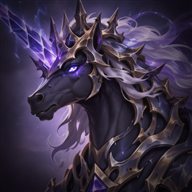 The Ironclad TyrantWho Does Not Do SubtleBelieves any problem is a door, and every door opens the same way.
The Tyrant has plating on its plating and a longstanding opinion about your gate, which is that it's a door that hasn't been opened correctly yet. It has never attempted stealth in its long existence and would consider the idea insulting: somewhere back before the village, it took a kingdom by walking at it in a straight line for three years, and it has not updated the strategy since, mostly because it has never needed to. Everything it sends is heavier than the thing before it, which it regards as a philosophy rather than a rut. Its goal, stated plainly, because it does not see the point of hiding it, is this: through the gate, over whatever is standing at the gate, in a straight line, the same way as last time, because last time worked eventually, and eventually is the only speed the Tyrant has ever needed to go.
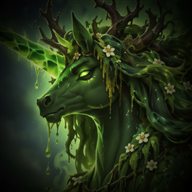 The Sump BelowWhich Is Still ArrivingYou did not kill it. You made two of it and annoyed both.
Less a unicorn than a pressure with a horn. The Sump Below is what happens when the ground underneath something gives up, slowly, over a very long time, and it has been giving up under this particular village for longer than the village has existed to notice. It has no throne, no army in the usual sense, and no real memory of becoming what it is. One day there was solid ground, and then there was an argument about whether the ground was solid, and the Sump Below is what that argument has grown into. It does not want the village conquered. It wants the village dissolved into the argument, turned, the way everything it touches gets turned, into two smaller, wetter versions of the same unresolved problem. Hitting anything it sends is technically a promotion for that thing, and the Sump Below considers this a fair trade, since it has never lost anything by dividing, only ever gained more of it.
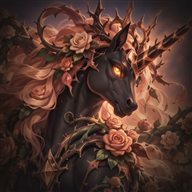 The Rustbloom WidowWho Grows Her ProblemsDoes not make her monsters. Plants them, and waits, and is never in a hurry.
The Widow gardens. That is the whole of it, and it is worse than it sounds. Long before the village, she buried something she loved in good soil and it came back wrong, and rather than grieve it she decided that was simply how gardening worked now, and kept planting. Everything she sends up the lane was grown on purpose, tended for longer than most wars last, and closes its own wounds out of sheer habit: pruning, to her, is just another word for healing, applied to the wrong thing, on purpose. She is not in a hurry, and that is the frightening part: she has already planted something at the tree line, and she is not attacking so much as waiting for harvest. Her goal is not to take the village by force. It is to grow it, quietly, patiently, one thorn at a time, into something that belongs to her garden instead.
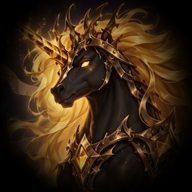 The Gilded HushWho Charges For SilenceNot stealing. Invoicing. There is a difference and it is very keen to explain it.
The Gilded Hush does not raid. It audits. It arrived one ordinary morning holding a ledger nobody remembers agreeing to, opened to a page with the village's name already on it, and has been quietly adding line items ever since: a shadow here, a missed payment there, an entire harvest logged as 'overdue.' Nobody knows who wrote the first entry or when the debt supposedly began; the Hush has the receipts, and the receipts are beautiful, and asking to see the original agreement only produces a more beautiful receipt. Its army is polite, well dressed, never raises its voice, and will absolutely take the doorframe if the door itself is not currently available for seizure. Its goal is simply to collect in full: not to burn the village down, but to repossess it, line by line, until everything in it belongs to the ledger instead of to the unicorns who built it.
 The Nine-Eyed ChoirWhich Has Heard About YouSings about everything you do, in real time, slightly ahead of you doing it.
Nobody is sure whether the Choir is one god with nine eyes or nine gods who happen to sing in perfect time, and the Choir enjoys the confusion too much to ever clear it up. Ask it directly and it will simply harmonize the question back at you, slightly ahead of when you asked it. It narrates the battle as the battle happens, in real time, occasionally a half-second before something occurs, which it insists is coincidence and which nobody watching believes for a second. Villagers have reported being harmonised at mid-conversation, which is not a sentence anyone wanted to have to write. What the Choir actually wants is not conquest in the usual sense. It wants to be the version of events that gets remembered, the song that outlives the war, so that whatever happens to the village, the story the world tells afterward belongs to the Choir and not to whoever actually won.
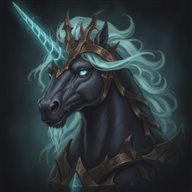 The Frostbitten BellWhich Rings Before The ColdRings once for the frost and once more because it enjoyed the first one.
A bell nobody hung, in a tower nobody built, that is nonetheless extremely on time. Nobody remembers the Frostbitten Bell arriving, because by its own insistence it was always scheduled to be here; it simply produced the paperwork once the village existed to argue with. It does not attack so much as schedule you: an appointment gets set, frost gets sent to keep it, and lateness is treated as the only real crime available in its worldview. Its minions arrive at the announced hour, chilled and mildly officious, less interested in winning than in confirming the meeting is, in fact, happening as booked. Its goal is not the village exactly. It is the closing. The Bell has, somewhere in its ledgers, an ending already written down for this place, with a date on it, and it intends to ring that date in on schedule whether or not the village is finished growing.
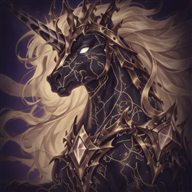 The Crooked CartographerWho Draws The Road You TakeRedraws the road while you are standing on it, then acts hurt that you are lost.
Every lane into the village was walked once, honestly, by a unicorn who loved the work: steady compass, patient ink, boots worn thin, and a map that came out simply, correctly, beautifully boring. That map is still out there somewhere, accurate and unread, because the Crooked Cartographer got hold of the original survey (nobody agrees on how; the Cartographer keeps several gorgeously inked, wildly contradictory confessions on hand and will happily read you all of them) and has been lovingly 'improving' it ever since. It does not so much lie about the road as fall for a better version of it, again and again, in fresh ink, with a flourish, and then insist the new road was there all along. Ask why last night's shortcut is gone this morning and it will unroll a map proving the shortcut never existed, sealed in wax, illustrated in the margins, and entirely untrue, and it knows that, and it still expects you to admire the linework. The road moves because the Cartographer moves it, one gorgeous, invented lane at a time, for as long as anyone can remember the ground holding still, which turns out not to be very long at all. You get used to it. Everyone does, eventually. Getting used to it, more than any map, is the whole trick.
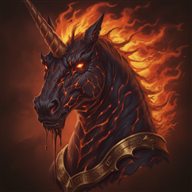 The Ember GluttonWhich Is Still Hungry, Thank You For AskingAte the last village. Says it was fine. Says yours looks better.
The only one of the ten that is honest about what it wants, which somehow makes it worse rather than better. The Ember Glutton ate the last village, says so freely, says it was fine, says this one looks better, says all of this the way a well-fed unicorn describes a restaurant they are already planning to return to. It has no elaborate scheme, no ledger, no map. It got hungry once, a very long time ago, in a way that never actually finished, and has simply been eating on that same appetite ever since, one village at a time, in one long unbroken meal. Everything it sends up the lane is warm to the touch and in a tremendous hurry, because it is hungry and they are, too, on its behalf. Its goal could not be plainer: the village, specifically, in one sitting, the same way as the last one, and it would very much appreciate you not making it wait.
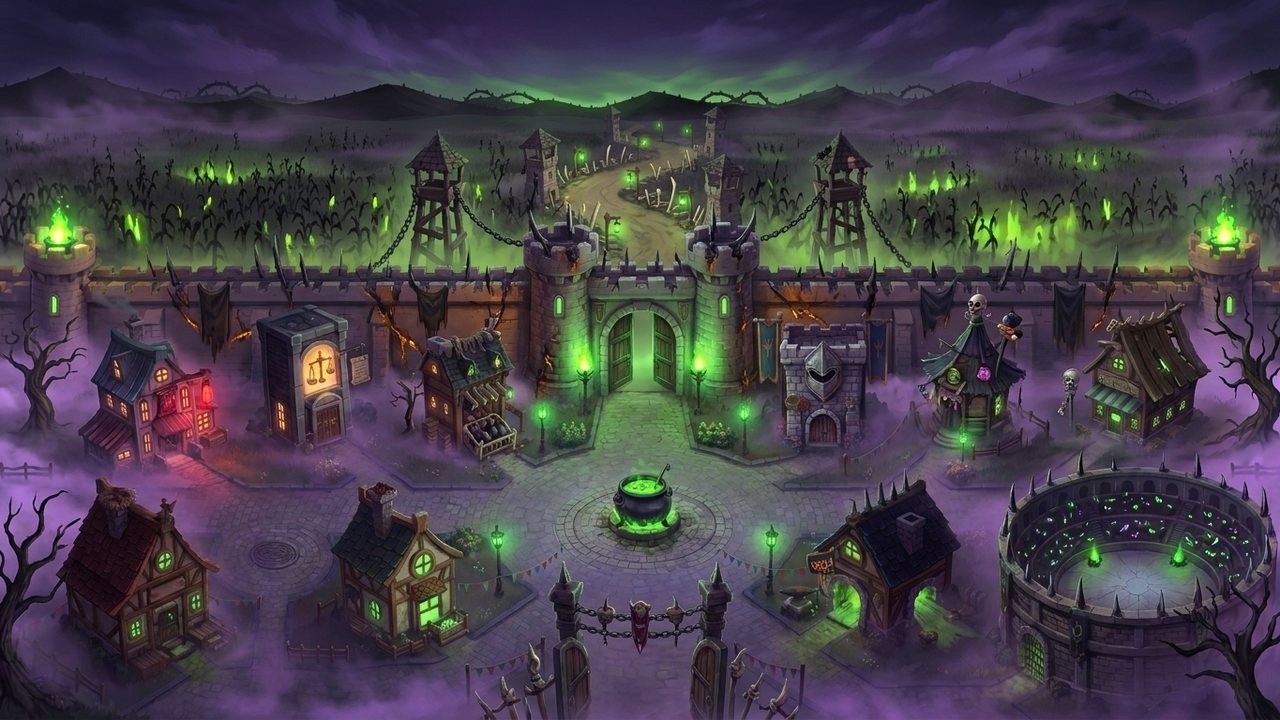
For those who ride with the Horde. Not everyone in the corn fights for the village. The Horde marches for the Ten, each player under one god, taking the fields one night at a time, and gathers essence from every field it takes. What the Horde does not understand is what essence is: the life of this world, which is the same thing as its joy, carried off a jar at a time for the gods. The gods have promised the Horde a share of this world when it is emptied. They have made that promise on every world the comet has crossed.
V. Where the line holds
One field is left, one road into it, and one village at the end of the road. The Ten cannot agree on who gets it, and not one will share a night with another. That is the only reason it still stands.
If it goes dark, there is nowhere further to fall back to. The comet is waiting to leave.
VI. Stories from the village
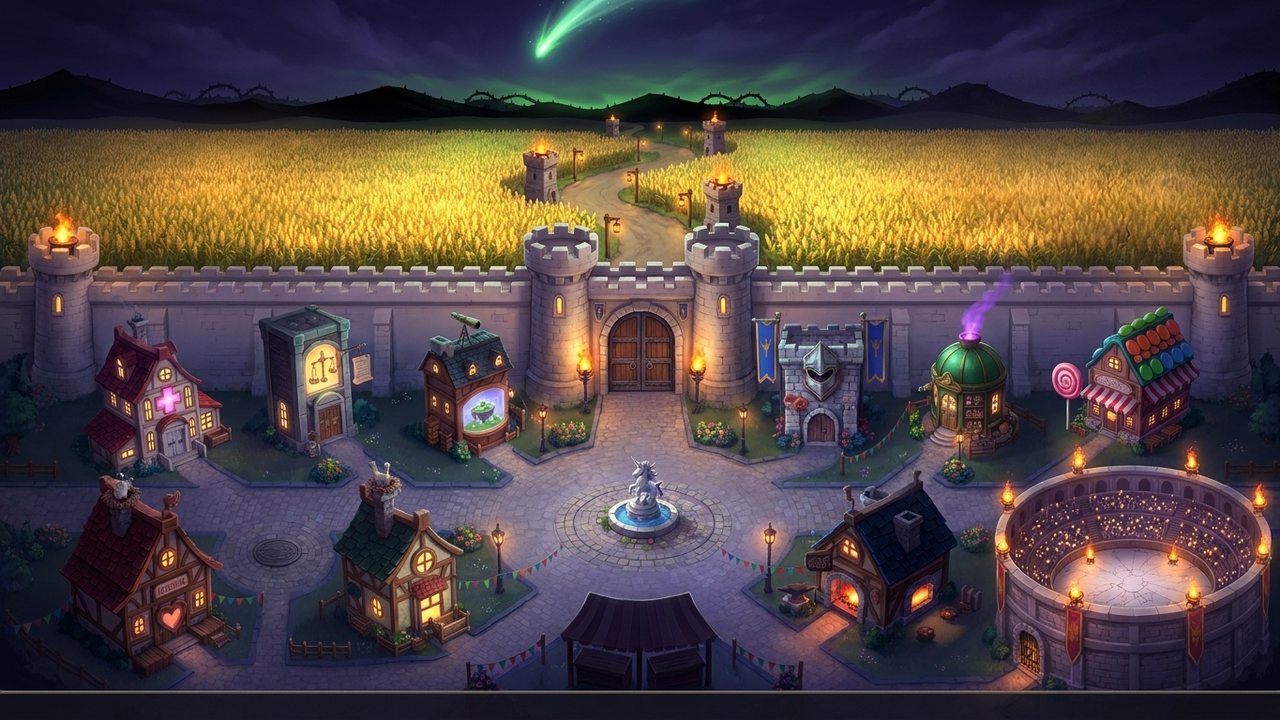
Before the comet, unicorns kept to their own herds and their own meadows. When the sky filled up, each herd met it alone, and that is how a thousand fields fell. The survivors learned something the Ten never planned for.
Corn planted by lantern, rows watched through the night, every harvest shared out at the wall instead of guarded by one herd.
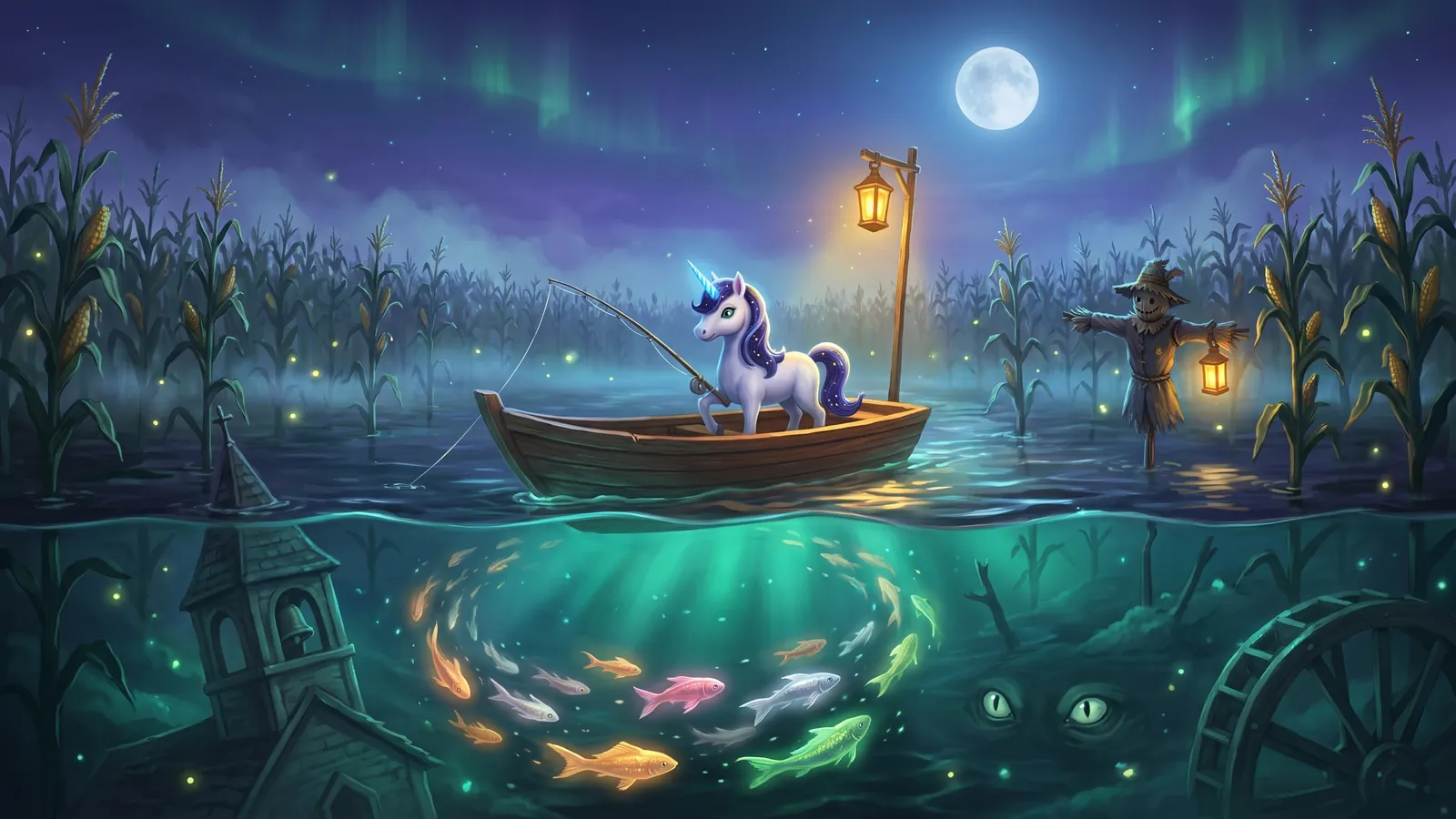
Jeb Purdy, an old possum, rows out on the flooded corn at night with a lantern and a rod. Unicorns ride along now. The village eats because they do.
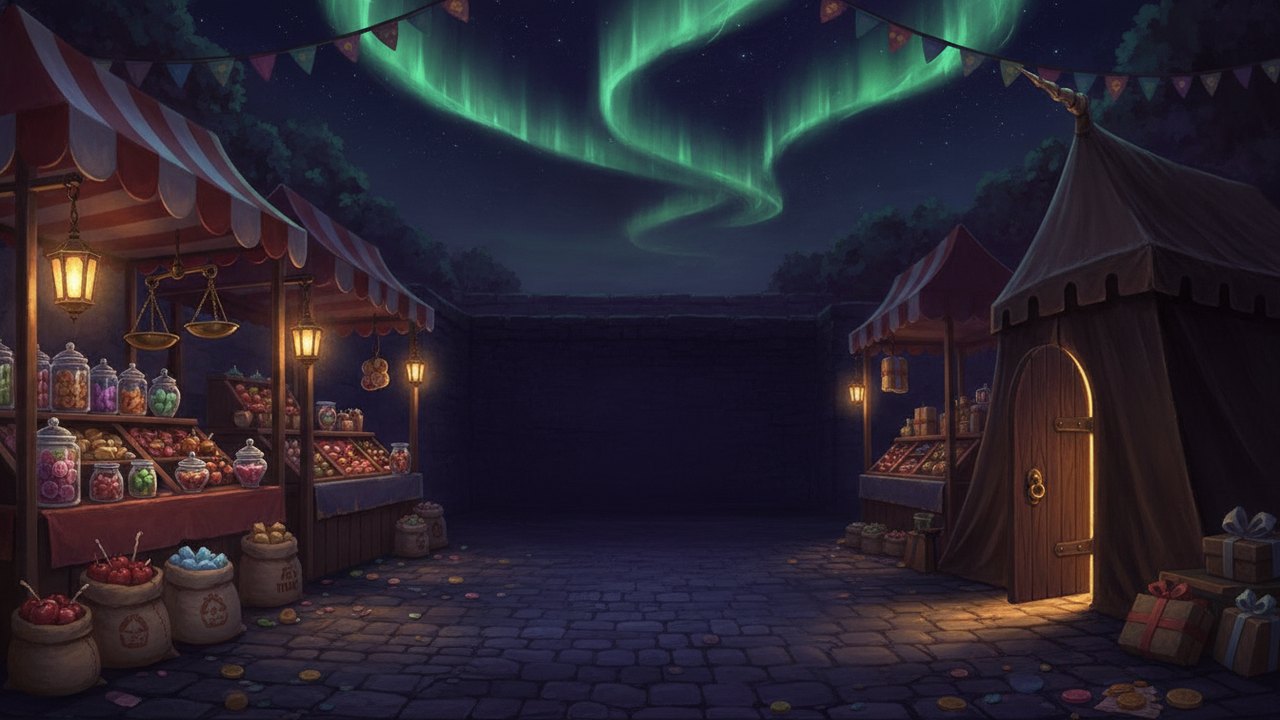
The stalls stay open in the square, so a unicorn back from the road can trade what it found for what it needs.
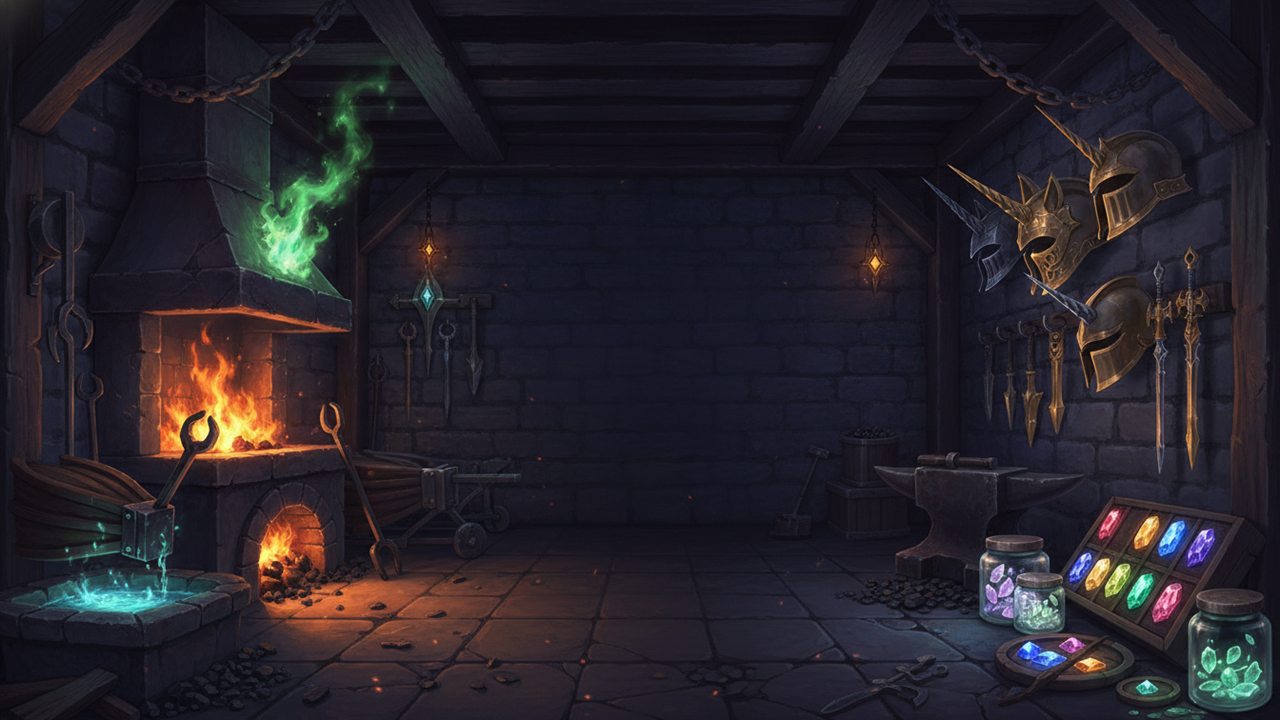
The blacksmith hammers whatever falls out of the wreckage into something useful, for anyone on the wall.
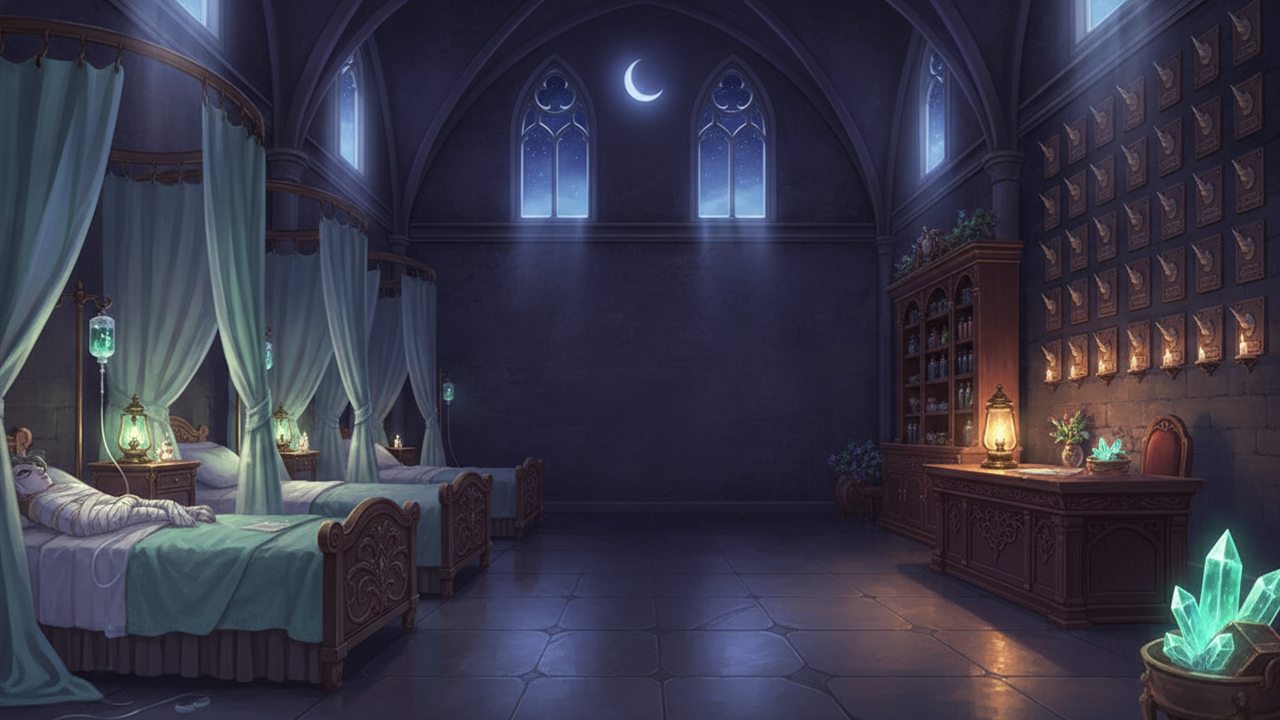
The hospital glues the defenders back together, whoever they are and whatever they are, and sends them back to the wall.
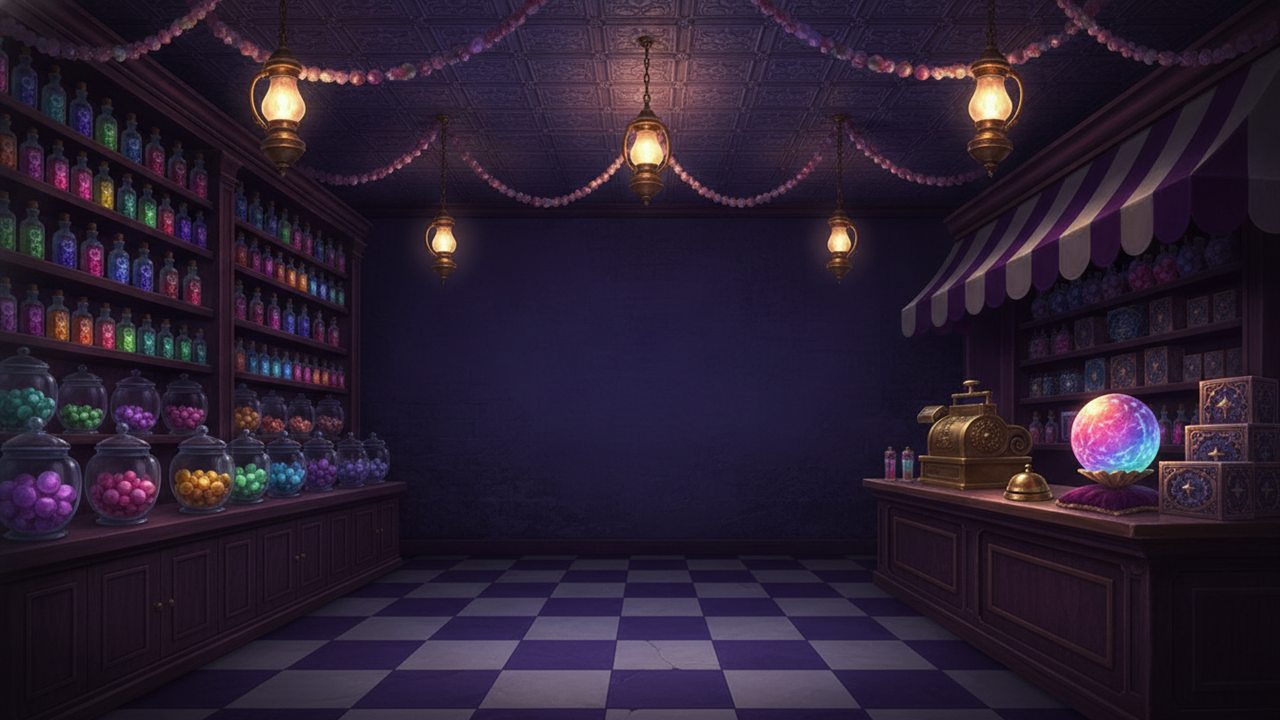
The nursery keeps the next shift warm. The candy store sells courage by the bag.
None of them could hold that wall alone. Together, they have held it every night so far.
VII. Stronger than joy
There is one thing on this world stronger than joy, and the Ten cannot feel it. It is the power that forms the hidden goodness of this and every world: the power of love. Love for the neighbour beside you on the wall, for the stranger at the next stall, for the fields and the water, for the world itself and for all things good. It grows wherever the village works together and looks after its own.
The gods have no word for it and no way to understand it. They have crossed more worlds than anyone can count and never once met it. All they know is that this village will not break, however hard they push.
Every neighbour who stands for the goodness of the world, and stands with you, pushes the Horde back. The more the villagers work together, care for each other and stand their ground, the further the Horde is pushed back, and the more the gods feel their grip on this world begin to slip.
Eventually, the world will rise or fall. Which side will you be on?
Cute on both sides of the fight. Ruthless in the middle.
VIII. What the horns became
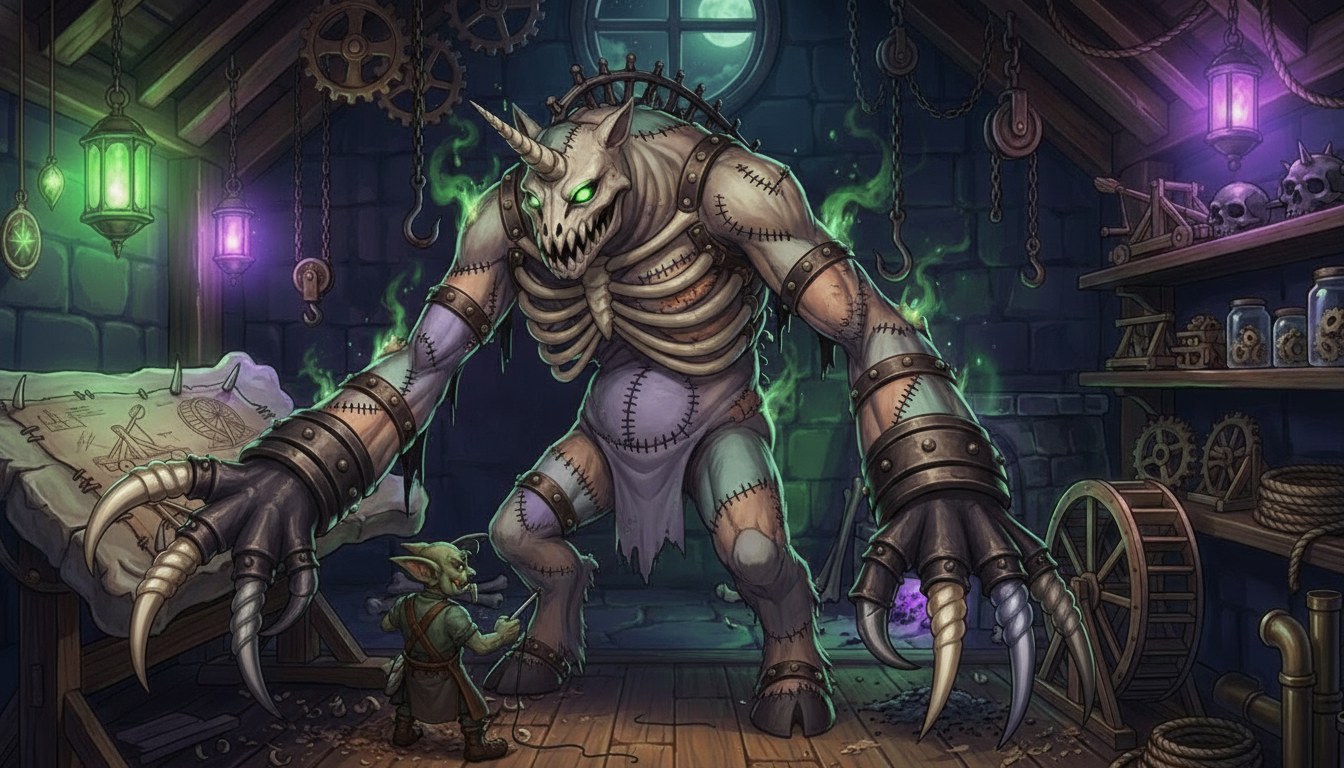
The horns were supposed to be enough. Pressed at the Fleshsmith, a horn gives up its powers slowly: a little meal, a shard, a glow. The Ten are not patient.
So the Fleshsmith tried something else. Six carcasses on a slab, more if it can get them, stitched and raised into one body. Then the claws: six horns, each from a unicorn that did not come home, set on its hands like knives. When the last socket is filled, the god it serves leans in and gives it one gift from its wheel.
It has no name of its own. The Camp calls it the Hornclaw.
IX. A horn to the sky
The herd's answer was not a weapon. It was a horn of their own, a seed of pearl the Blacksmith cut from what love leaves behind when a village works together, planted at the edge of the road. It grows the way a horn grows, one turn at a time, up toward the sky and the comet. The higher it climbs, the more light it gathers, and the more it gives back to every unicorn standing in its glow.
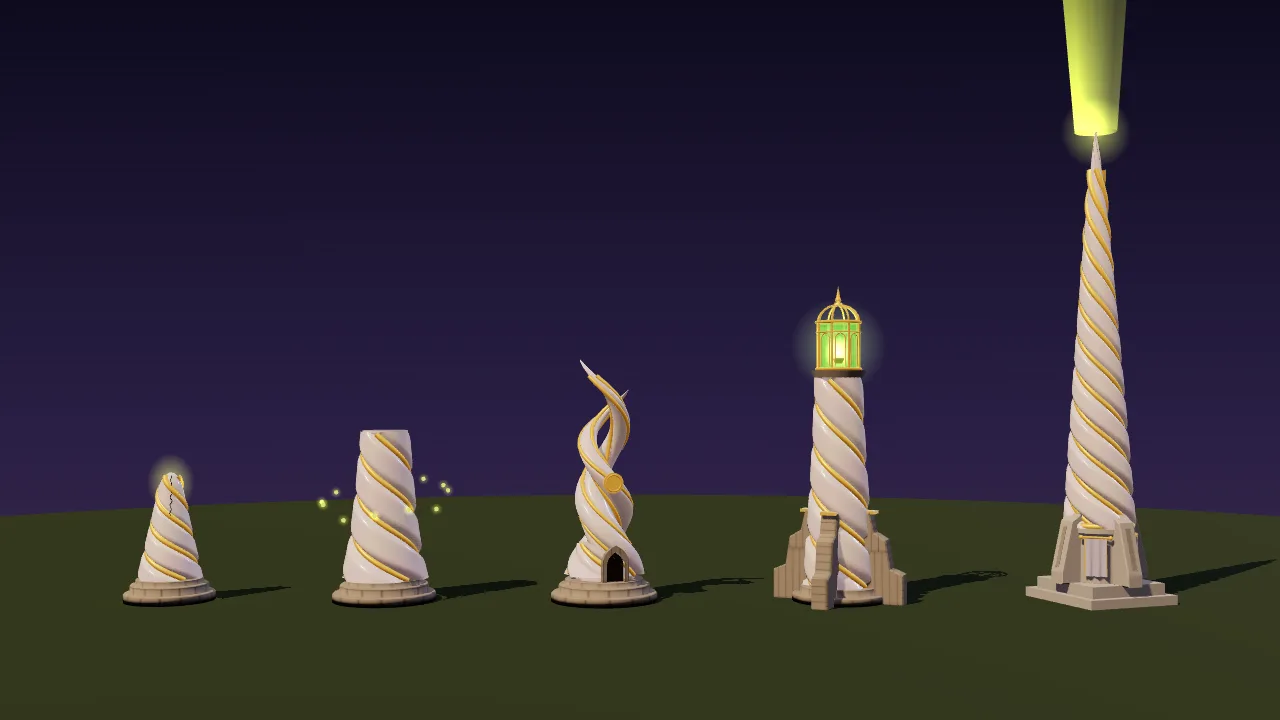
Then something happened that nobody planned. A Horde grunt stood too long in the light and forgot what it was angry about. It put its claws down. In the morning it was at the gate, asking to stay. Others followed. The village gave them a hollow of soft grass past the Farmstead, and they called it the Happy Hollows. The converts work there now beside the unicorns, spinning Truce Thread, blowing Kinlight Glass and beating Amity Silver for the tower that won them over.
The happiest of them keep a kiln at the heart of the Hollows. What comes out of it, Kinheart, cannot be made anywhere else, because only a friend can make it.
The Ten have noticed. The taller the tower grows, the more of the Horde aim at it. When it cracks, the light dims, and the converts start to remember how loud the Camp was, and how simple. If it falls, they leave one by one, a little faster each night it stays dark. A tower that stands keeps its friends.
The guide shows both sides, the Mercenaries and every game behind the village doors.