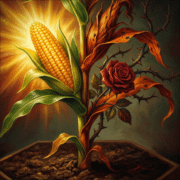
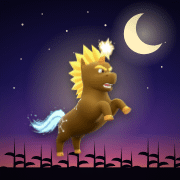
Ten Nightmare gods took the world, field by field. One village kept its lights on, its corn
glowing and its opinions loud. This is your guide to that village, the two sides fighting over it, the hands
for hire in between, and every game behind its doors.
I. The story so far
The Battle for the Last Bright Field
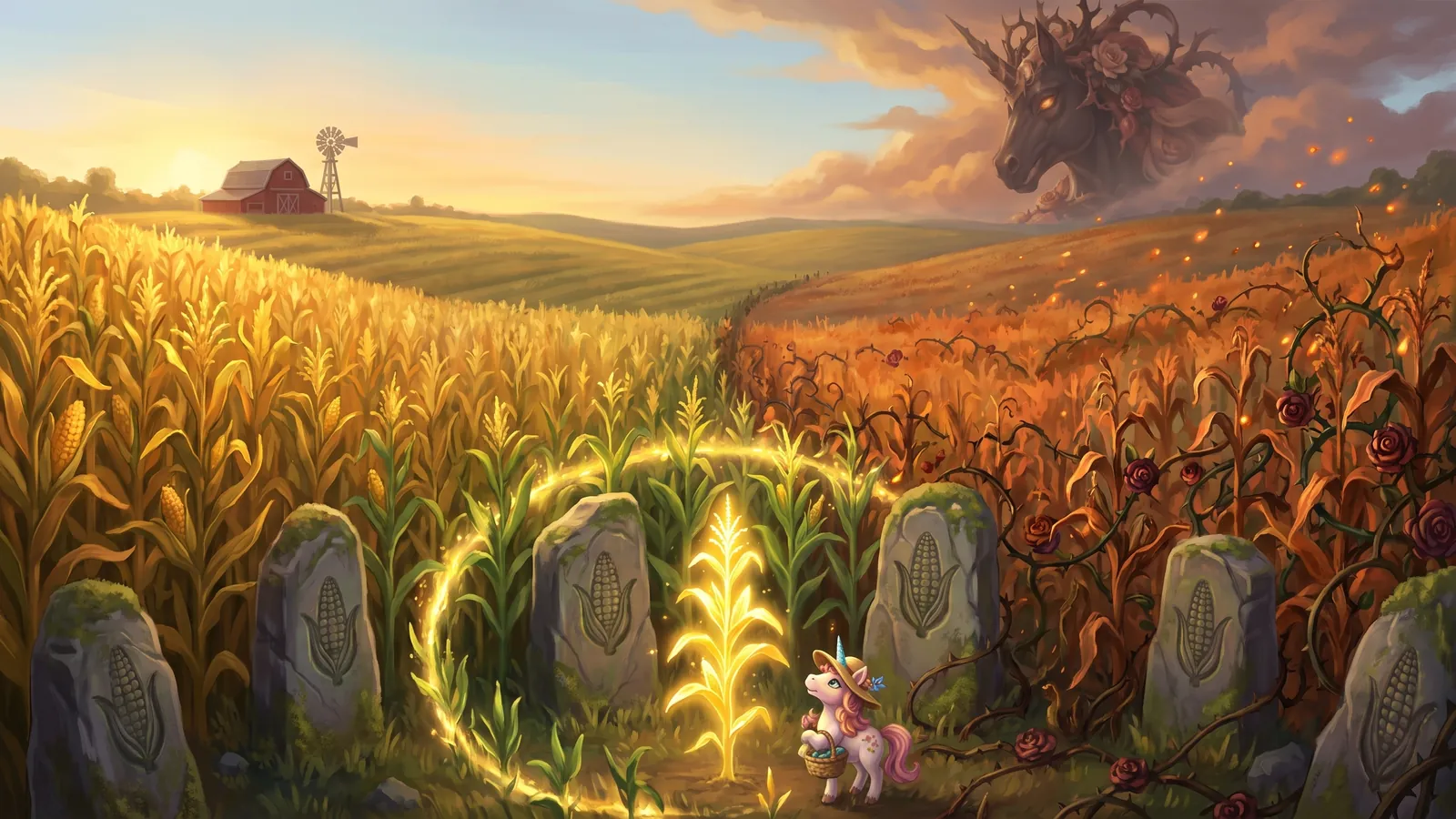
There used to be a thousand bright fields, and the corn glowed with the joy of the world.
Then, out of nowhere, the green comet came, and one harvest ten shadows rose over the horizon, declaring the
lands were theirs. The herds met them on the fields, the hills and the ends of the world, and lost. The Nightmares and their
Hordes swept the lands, destroying anything and anyone that would not bow, and the world is theirs now, dark
from horizon to horizon. But not all of it. In the corners of the world, holding the line, the resistance held
strong. This is the story of one of the last villages of light: one field, one road into it and one village at
the end of that road.
The Nightmares never set a hoof on the field themselves. They hang in the sky above the road and send whatever
they have grown, hired, invoiced or accidentally sneezed into existence. What they want is the corn: it has
grown in the dark so long that it glows, and every ear holds a little of the light they lost the right to.
Ten gods, ten plans, and not one of them willing to share. That is the only reason the village is still
standing.
What holds the village is the one thing the gods cannot feel: love, the hidden goodness of this and every
world. Every neighbour who stands with you pushes the Horde back. Eventually, the world will rise or fall.
Which side will you be on?
Read the whole story: where the Ten came from, what they came for, and how the village
learned to stand together.
Cute on both sides of the fight. Ruthless in the middle.
The Ten
Every wave on the road is sent by one of them, and every Horde player serves one.
The Hollow SovereignWho Rules An Empty RoomMakes things by accident and then insists they were the plan.
The Swarm-MotherWho Is Always Already HereDoes not send soldiers. Sends rumours with teeth.
The Ironclad TyrantWho Does Not Do SubtleBelieves any problem is a door, and every door opens the same way.
The Sump BelowWhich Is Still ArrivingYou did not kill it. You made two of it and annoyed both.
The Rustbloom WidowWho Grows Her ProblemsDoes not make her monsters. Plants them, and waits, and is never in a hurry.
The Gilded HushWho Charges For SilenceNot stealing. Invoicing. There is a difference and it is very keen to explain it.
The Nine-Eyed ChoirWhich Has Heard About YouSings about everything you do, in real time, slightly ahead of you doing it.
The Frostbitten BellWhich Rings Before The ColdRings once for the frost and once more because it enjoyed the first one.
The Crooked CartographerWho Draws The Road You TakeRedraws the road while you are standing on it, then acts hurt that you are lost.
The Ember GluttonWhich Is Still Hungry, Thank You For AskingAte the last village. Says it was fine. Says yours looks better.
II. Pick a Side
Two sides. One road.
Every fight in the corn is the same fight seen from two ends of the road. You choose
which end is yours.
You Pick a Side once, and it follows you through every game. The Horde is a one way road: a heart
given to a god does not come back to the Herd on that account. The god itself can be changed later, for a
substantial tithe.
III. The Herd Defense
Hold the line. Be insufferable about it.
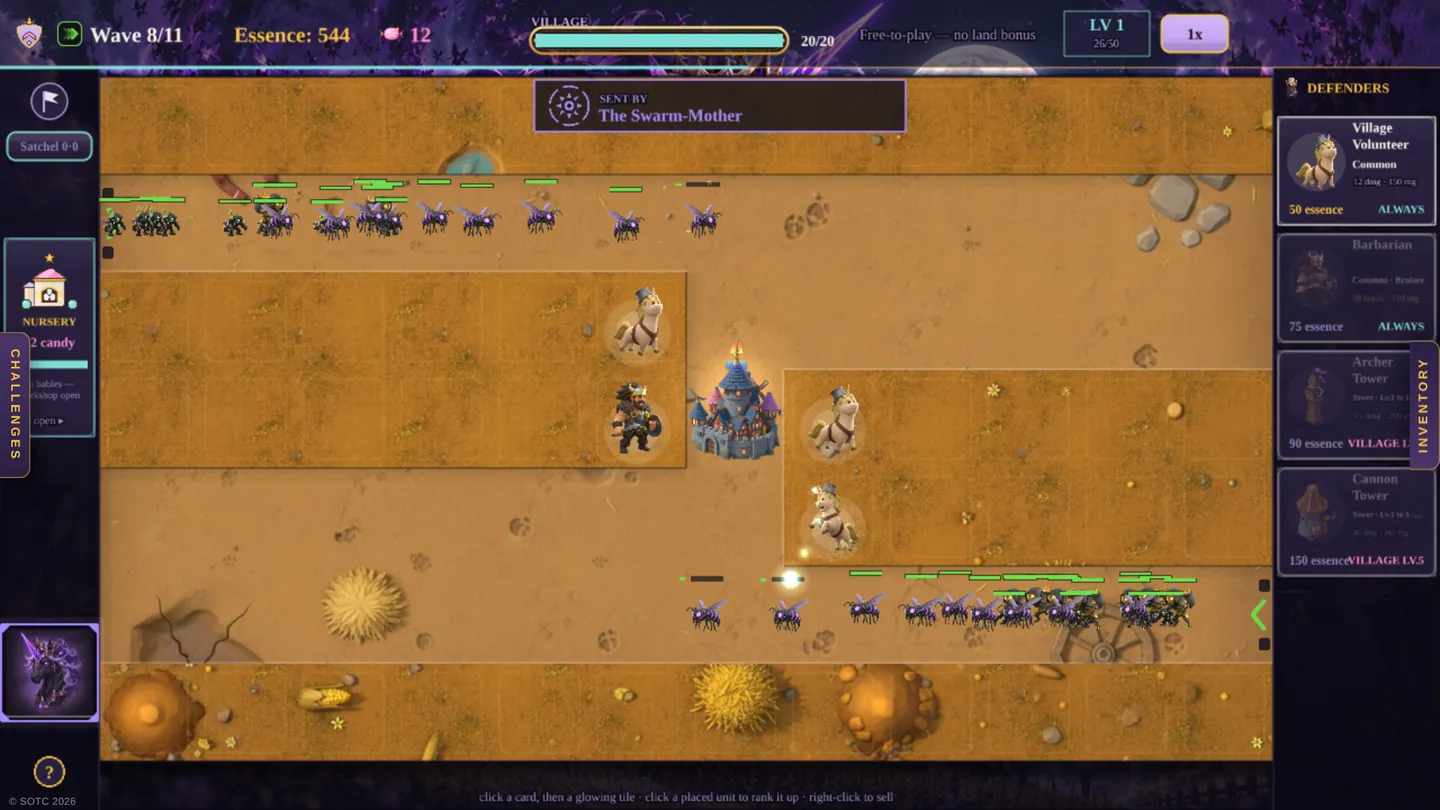
The Fields, wave 8 of 11. The Swarm-Mother sends her Nightbuzzers in through two gates at once.
The Herd are the village's defenders, and the Fields are where they earn it. The Nightmares walk the road
toward the village. Your job is to make sure none of them gets there.
Build beside the road, never on it. Pick a defender from the bar and a glowing tile next to the
road. Each one costs essence, which trickles in every second and pays out for every kill.
Rank them up. Click a placed unicorn to rank it up. At rank 3 its class power wakes and fires by
itself.
Eleven waves a board. Every walker that reaches the village takes a bite of its bar. Empty it and
the board is lost. Hold every wave and it is won.
Look after the fallen. A unicorn knocked out goes to the Hospital with a bleed-out clock. Pay its
potions in time and it heals. Run out, and its name goes on the Wall of the Horn for good.
Who stands beside the road
Heart unicornPink, sincere, and personally offended by every Nightmare on the road.
Star unicornHits like something that fell from the sky, then pauses for the applause.
Moon unicornNever sleeps on watch. Fires a little faster for it, and is a little short tempered for it.
Village VolunteerA helmet that does not fit, and there are always more. Always on the bar.
The BarbarianThe Herd's own hero, a bruiser who is always on the bar.
The GriffinThe one defender allowed on the road: it lands there and blocks it, and walkers stop to fight it.
The Herd's war machines
Built at the Blacksmith and picked in your squad. From wave 6 a machine rolls out of the village
gate onto the road, holds it like a wall, fights, and fires its power on a timer.
The Chipmunk EngineA treadwheel cart driven by nine chipmunks who each believe they are the engine.Overdrive: every 12 seconds the chipmunks sprint and it swings 70% faster for 3 seconds.
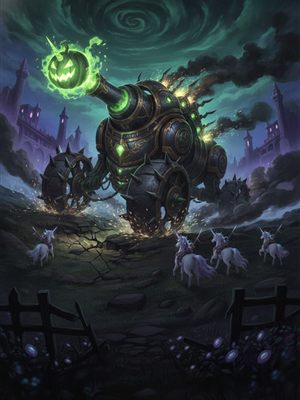
The Pumpkin LobberA catapult that lobs pumpkins four tiles down the road. They are not good pumpkins.The Big Pumpkin: every 15 seconds a great splash that slows what it lands on.
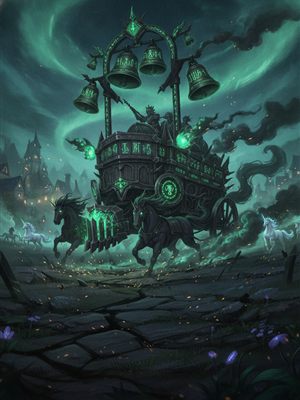
The Bell WagonThe village bell on a hay wagon, rung by whoever is nearest.The Toll: every 18 seconds the bell hits everything within two tiles and rallies the defenders near it.
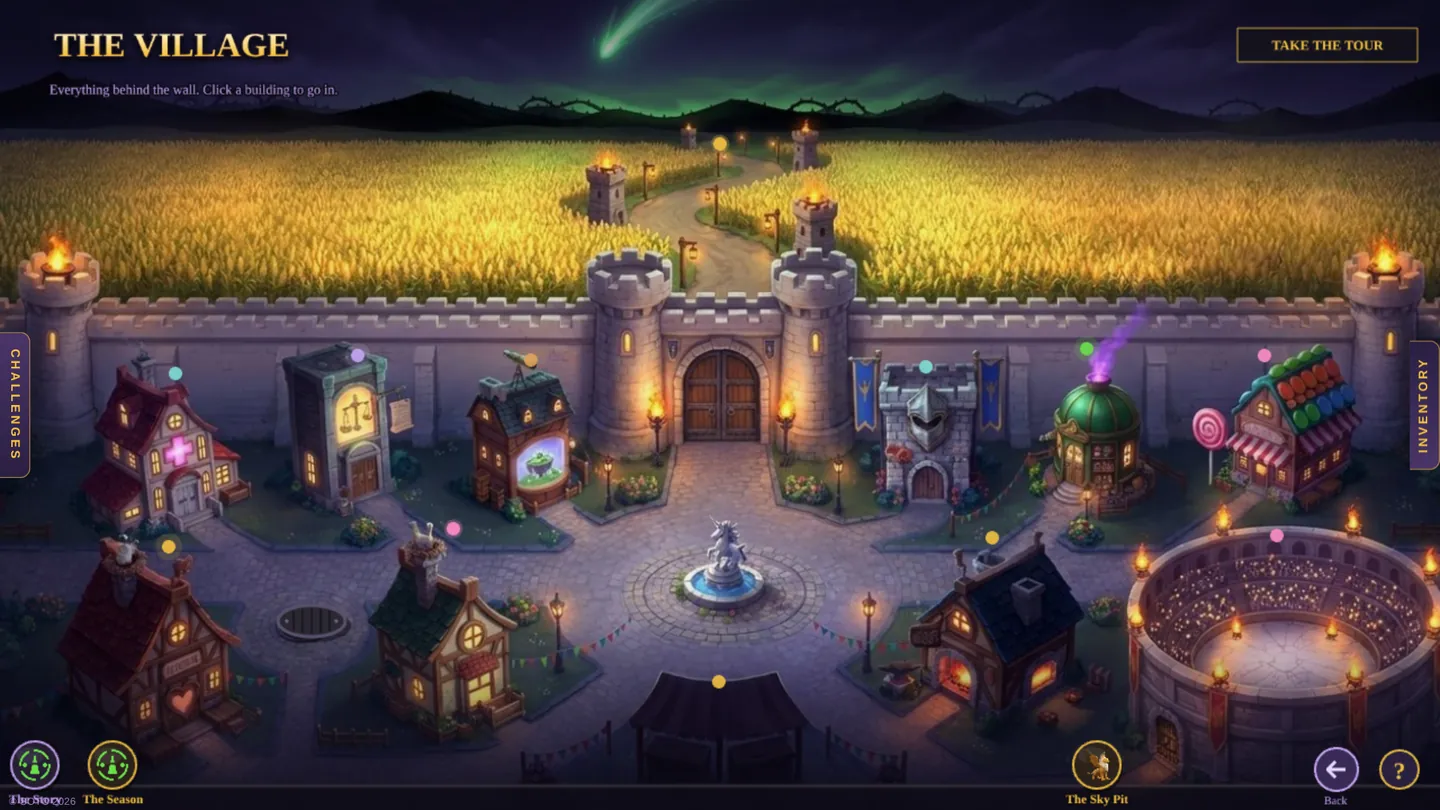
The Village. Everything behind the wall, and every building is a door.
Home
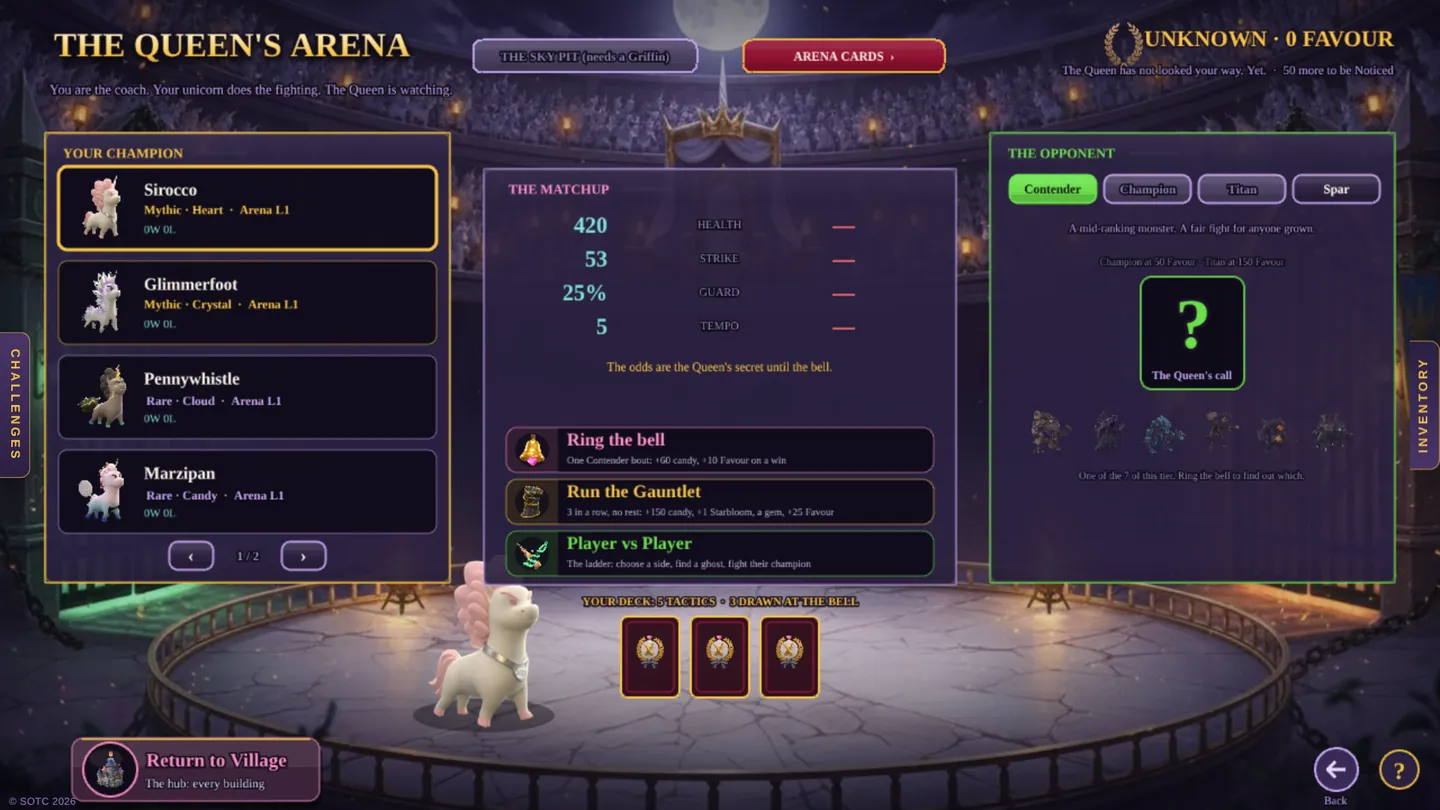
Between boards the Herd lives in the Village. The Arena is where the Queen watches you coach one unicorn
through a bout. The Hospital patches up the fallen, the Candy Store sells potions and treats, the Blacksmith
turns gems into gear and machines, and the Nursery and Stables grow the next generation. Barnaby the Real
Estate Agent sells land, and every land is a new board in the Fields.
The Village grows with you. Every level pays a purse of candy and Starbloom once, and at levels 2, 4, 6, 8
and 10 you sign a Charter at the fountain: one of two lasting perks, such as a fourth growth pen or two more
village HP on every board.
IV. The Horde Offense
Serve a god. Break a village.
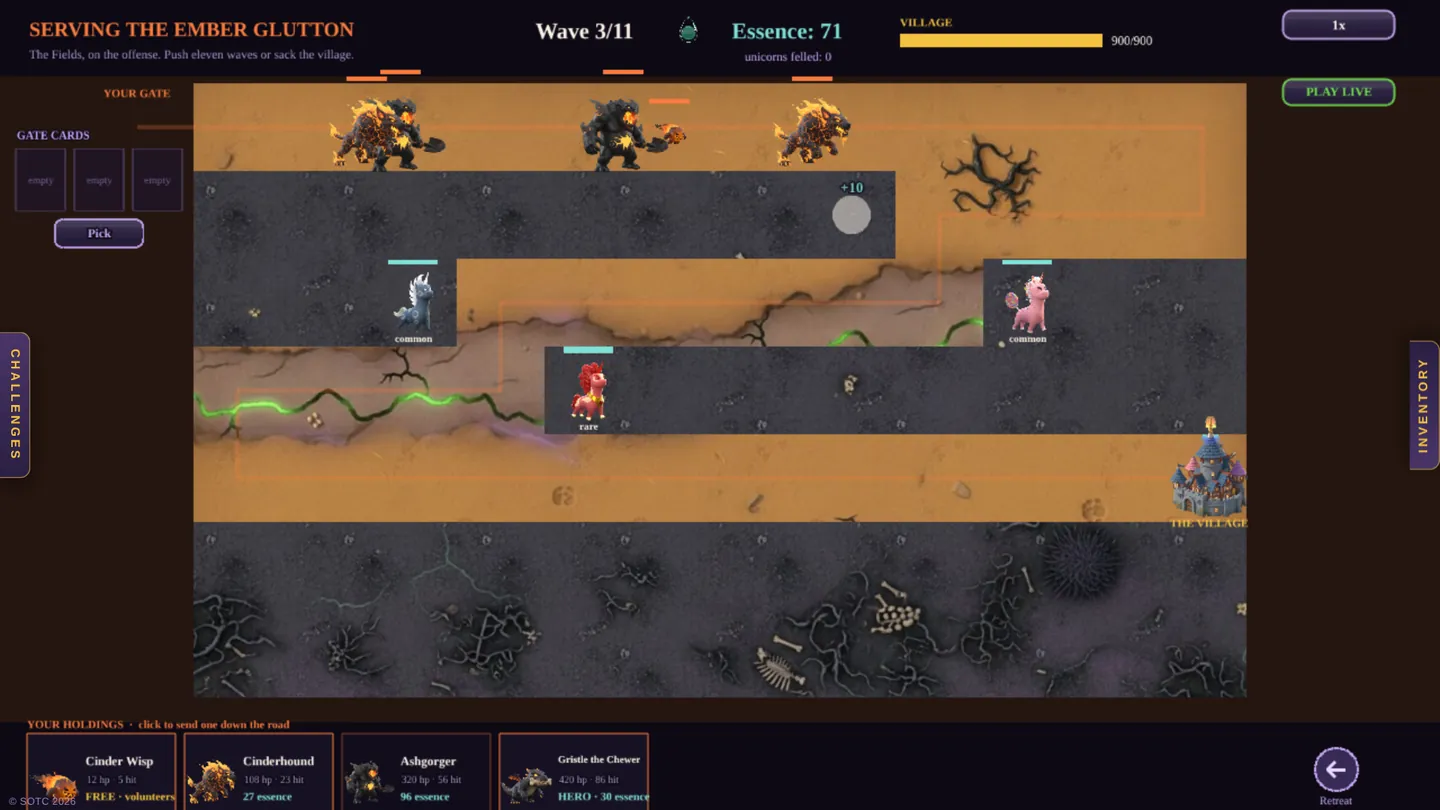
Serving the Ember Glutton. The god's creatures on the road, the unicorns waiting beside it, the bench below.
The Horde are the attackers. Swear to one of the Ten and you take its colours, its deck at the Gate and its
creatures on the Fields. Out past your camp is a village of unicorns. Break it.
You send, you do not build. Pick a land and press SEND WAVE, then click a troop on your bench to
send it down the road.
Numbers against the few. Volunteer grunts are free. Everything else costs essence, which comes in
as the rounds go and for every unicorn felled.
Push eleven waves or sack the village first. Every troop that reaches the village takes a bite of
its bar. Every unicorn you fell pays souls.
Some come home. Cheap troops mostly die where they fall. Dearer ones usually crawl home, and the top
tier always does. The elites and mini-bosses you own come home wounded to the Bone Surgeon's table, or lie on
the slab until potions and souls save them; on the table they can take grafts that make them stronger for
good.
What a god sends down the road
Shade SproutThe Hollow SovereignA sapling that fell asleep in the wrong shadow and woke up with legs and a grudge.
NightbuzzerThe Swarm-MotherA wasp the size of a dinner plate, made by a goddess who could not stop at one.
HushlingThe Gilded HushMoves like a rumour and smells faintly of other people's coins.
ChoirlingThe Nine-Eyed ChoirA ball of feathers and eyes that knows one note and holds it with total conviction.
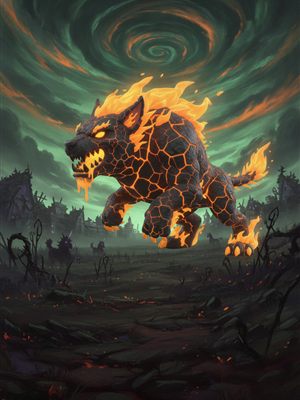
CinderhoundThe Ember GluttonA very good dog made of very bad materials.
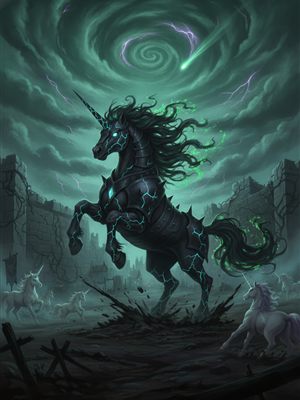
DreadhoofThe Ironclad TyrantA war-unicorn that took the other side's offer. The armour was part of the package.
Your dragon
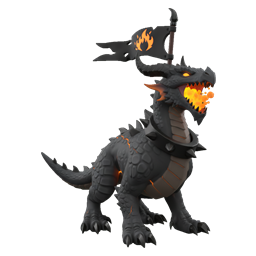
Every Horde run brings a hero: one of ten mini-dragons, from Pipsqueak the Spark to King Smoulder the Furnace.
It waits until round six, then joins the march. The first dragon is cheap. A
replacement after one falls costs ten times as much, so keep it breathing.
The Horde's war machines
Six of them, each built by a different god. Build up to two at the Fleshsmith. An owned
machine rolls with your horde from round 6 and comes home after the board.
When a god sends one at the Herd, it brings the trick shown here.
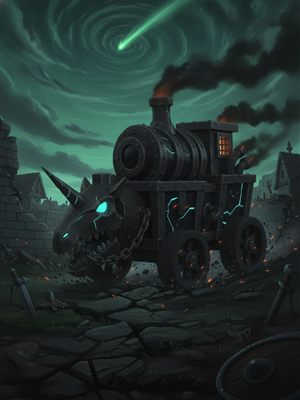
Ironclad Battering RamThe Ironclad TyrantA riveted iron ram on iron wheels, with a boiler nobody taught to whisper.Its boiler screams and it charges.
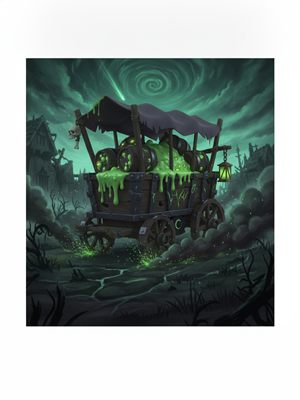
Plague WagonThe Sump BelowA cart of barrels, none of them sealed, all of them leaking something with eyes.Tips its barrels and the road runs with slime motes.
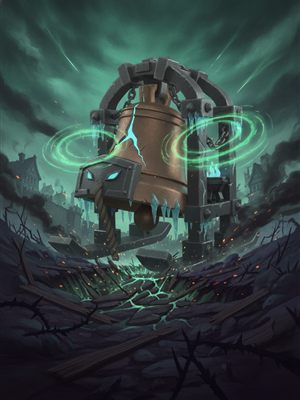
Bell CarriageThe Frostbitten BellThe Bell's great cracked bell on a sledge, tolling itself down the road.Tolls, and the frost closes over it like a shield.
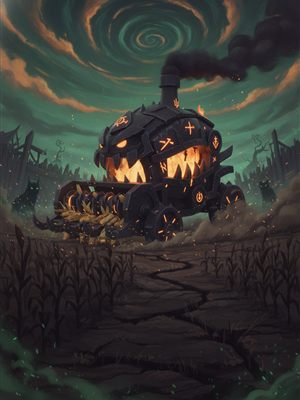
Corn ThresherThe Ember GluttonBlades and a furnace on a chassis, built to harvest what the Glutton cannot wait to eat.Eats what it threshes and mends itself.
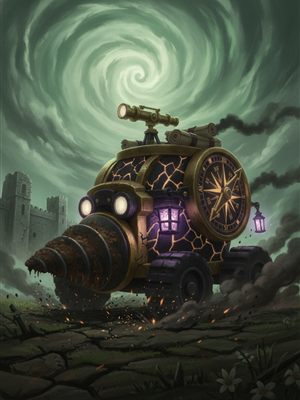
Survey EngineThe Crooked CartographerA drill on a chassis, steered by a compass the Cartographer inked himself.Bites into the road and surfaces further along it.
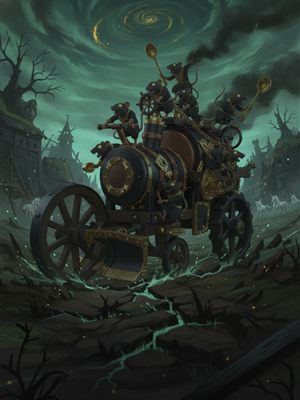
The Rig RatsThe Gilded HushA wagon, a boiler and stolen bits, crewed by nine rats who each think they are driving.Finds the big lever and bursts forward.
The Breach
Twice a board, an owned machine may leave the road and cut a path: it rams through one square of ground between
two stretches of road, and the road is shorter for every troop behind it. Never within three squares of the
village. Each breach costs the machine a quarter of its own hit points, so a Repair Hammer from the satchel is
worth packing. Three to a run: they are bulky.
The crews
Every war machine has a crew, on both sides: the Horde's machines on OFFENSE and the Herd's on DEFENSE. Each
run pays the crew experience, and it climbs six ranks from Green to Legendary, each worth a little more hit
points and damage. A crew ranked as high as its machine's level can upgrade it in place, one level at a time,
for the difference in price. Tap a machine at the Fleshsmith or the Blacksmith for its stats page. A machine
knocked to nothing is a wreck: its crew walks home wiser and rebuilds it on a timer, faster and cheaper the
higher it ranks. One fall in ten is a critical hit, and then the machine and its crew are gone for good.
The parts
Every war machine, the Horde's on OFFENSE and the Herd's on DEFENSE, has three parts, each a piece of the
machine itself: the Ram's skull, boiler and plating, the Lobber's throwing arm, pumpkin bin and braces, the
Gatlinghoof's barrel ring, hopper and plating, and so on for all ten. A part is fitted on the stats page in three marks, the first with a Blooded crew,
the second with a Veteran one and the third with a Legendary one, for the machine's own coin and some forge
metal. Each mark makes the machine better at its own job: tougher, harder hitting, faster, harder on the village,
or a stronger power. The part is bolted onto the machine's picture where it belongs, on its page and on the
board, with a silver glow at the second mark and gold at the third. A wreck keeps its parts; a machine the
critical hit destroys loses them.
Home for the Horde is the camp: the Village gone wrong in your god's colour. The Pit is your god's
Arena, the Bone Surgeon stitches up what crawls home, the Witch Doctor sells potions, the Hatchery sells eggs and
husks of your god's elite troops, the Fleshsmith forges gear and machines, and the Totem Yard holds the ten gods
as tiles. The camp's levels pay purses too, and its Charters are signed at the altar. In the Barracks two elite
troops breed an egg or a husk with its own blood, and before each march the War Band picks the six held troops
that go. The Fleshsmith also kits out those held troops with the Herd's own forge: a weapon and one armour, or two
armours for an Elite-rarity troop or a mini-boss. The gear counts on the march and in the Pit, where every held
troop keeps its own level, and a troop that dies for good leaves its gear on the rack.
V. The Mercenaries
No one owns them. Anyone can hire them.
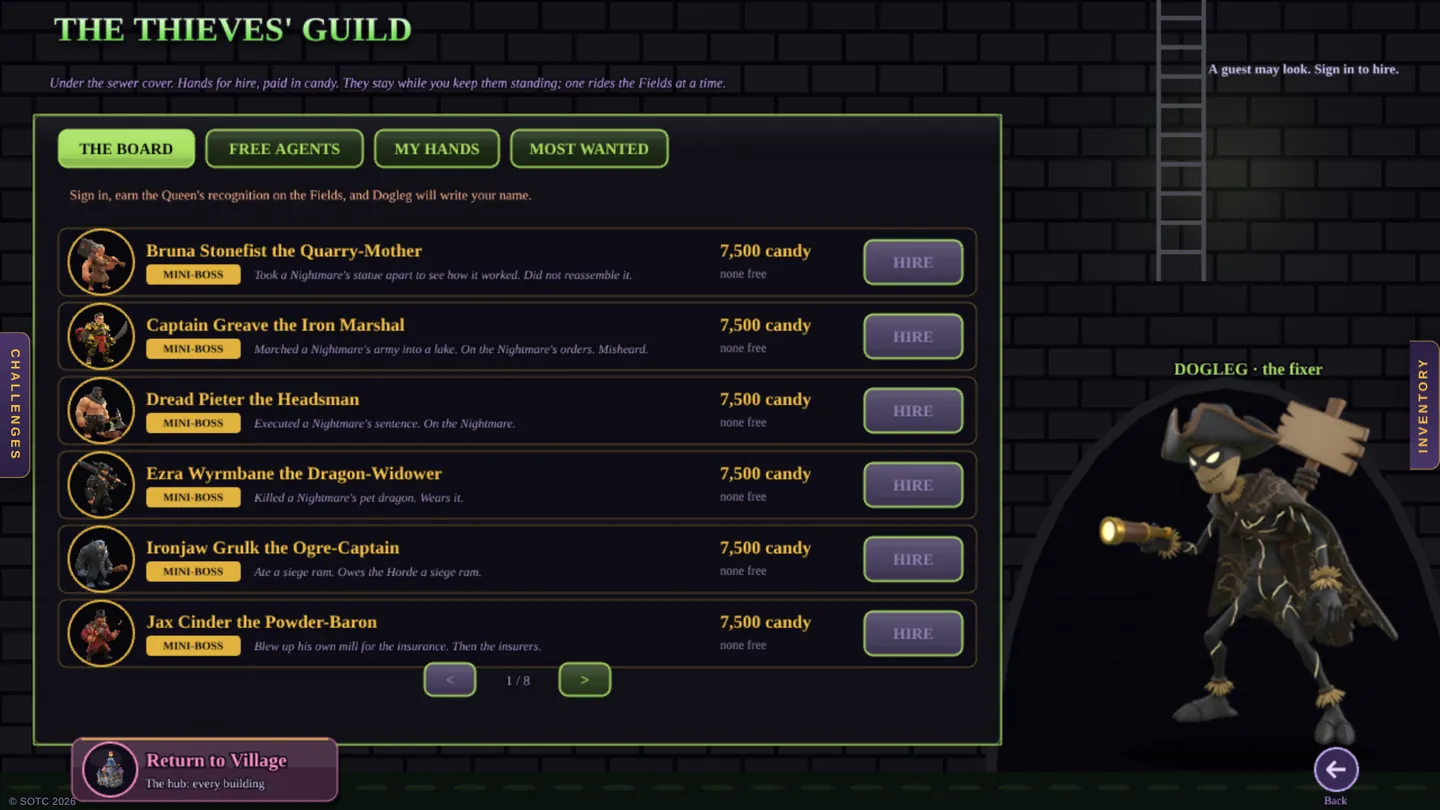
The Thieves' Guild, under the sewer cover. Dogleg the fixer keeps the ladder.
Under an iron sewer cover beside the Village fountain is the Thieves' Guild: forty-five hands for hire,
paid in candy by the Herd and in essence by the Horde. They are money minded, loyal to whoever paid last,
and every one of them has a crime to their name.
Four ranks. Common, Champion, Hero and Mini-boss. The price climbs with the rank, and a Mini-boss on
the Fields fights like one.
Earn the door. The cover only lifts once the Queen notices you (on the Horde, once your god marks
you) by your Village level.
One on the line. Hold as many as you can pay for. On the Herd's Fields one hand stands on the line
at a time, beside your own hero.
Two percent and they walk. At 2% health a hand says something mercenary and leaves the field,
straight back to the Guild for anyone to hire. They never die and never see the Hospital. Keeping them
standing is the whole skill.
Free agents. Now and then a hand starts thinking about other work. Then they go up for bids for a
while, and the highest bidder takes them. No bids, and they stay: it is a job.
A few of the hands
Brannockthe Barrel-Thrower CommonCheerful, certain, and completely wrong about how big the barrel needs to be.
Old Hobthe Sergeant CommonHas retired four times. Keeps a spare uniform for the fifth.
Piper Hallowaythe Field Medic ChampionBandages first, questions never, invoice later.
Dunmore Ironbellythe Wall ChampionHas never once moved out of the way. Sees no reason to start.
Ravenna Blackhornthe Warcaller HeroWears a Nightmare's horn on her helm. Took it herself.
Thorvald Sunderthe Earthshaker HeroThe hammer was his grandmother's. So was the temper.
Fifteen Mini-bosses sit at the top of the book, from Ironjaw Grulk the Ogre-Captain to Mother
Gallows the Hag-General, and they are the rarest contracts in the Guild. Down in the Gilded Hush the same
forty-five work as bodyguards: a guard never plays, but the morning after a losing day he has a quiet word with
the dealer, and a little of the loss comes back as house gilt.
VI. The games
Behind every door, another game
One account and one side carry into all of them.
The main game / Tower defense
Shadows of the Corn
The heart of it all: the Village, the Fields and everything in between, for the Herd or the Horde.
The Fields. Board after board of tower defense, holding the road or marching down it.
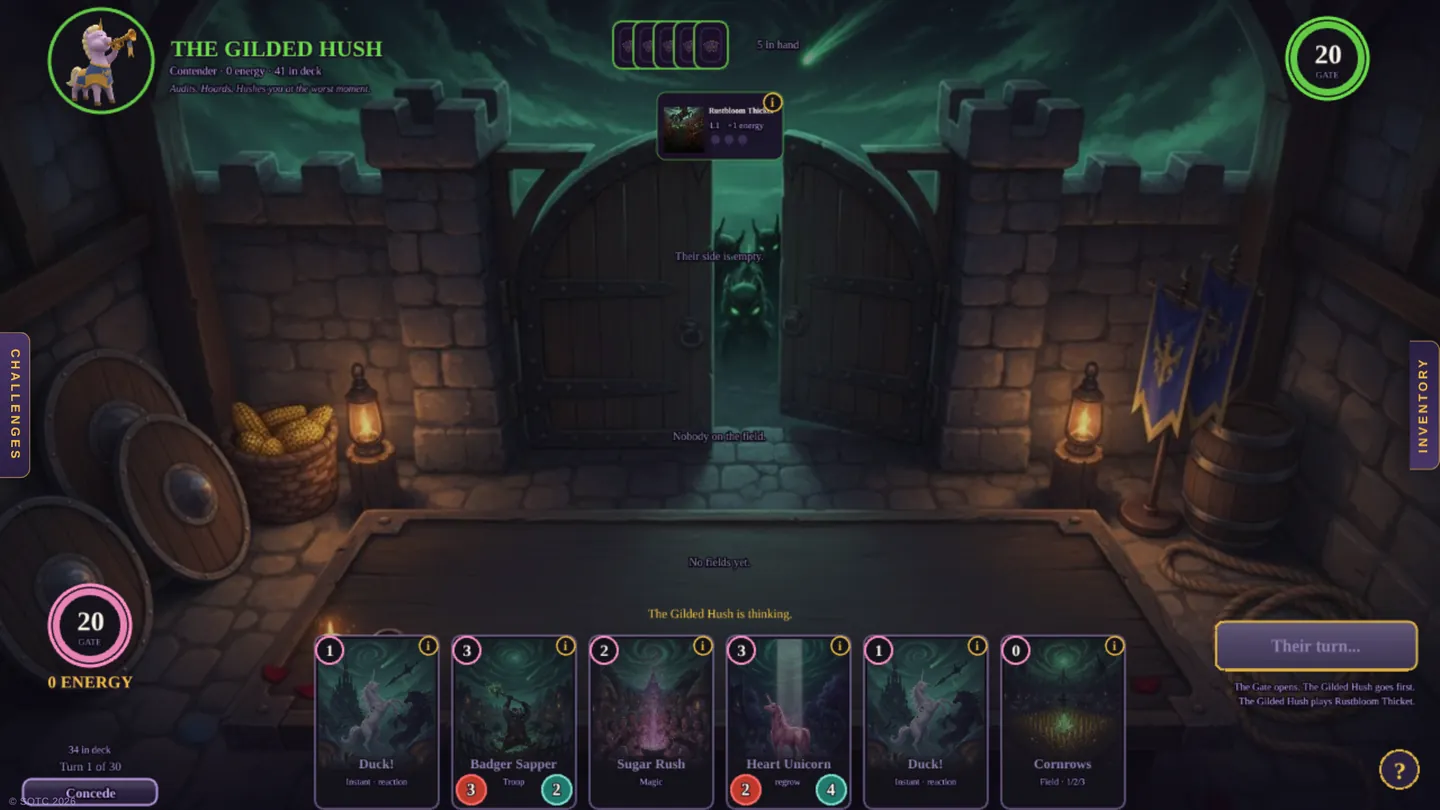
The Arena. Coach one fighter through a bout, round by round, with a hand of cards. On the Horde it is the Pit.
The Sky Pit. Fly your Griffin (or your dragon) yourself: two heights, five moves, one of you comes down.
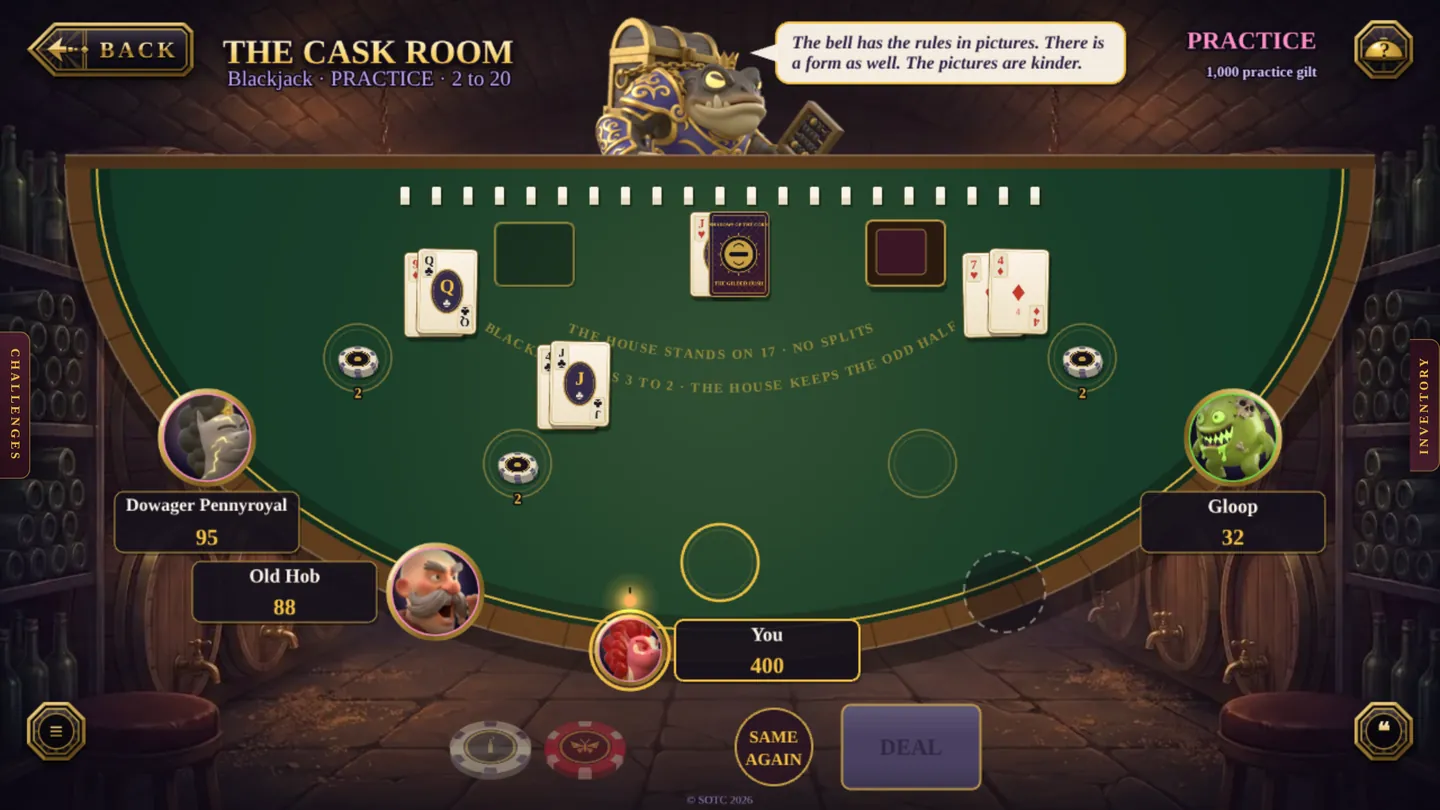
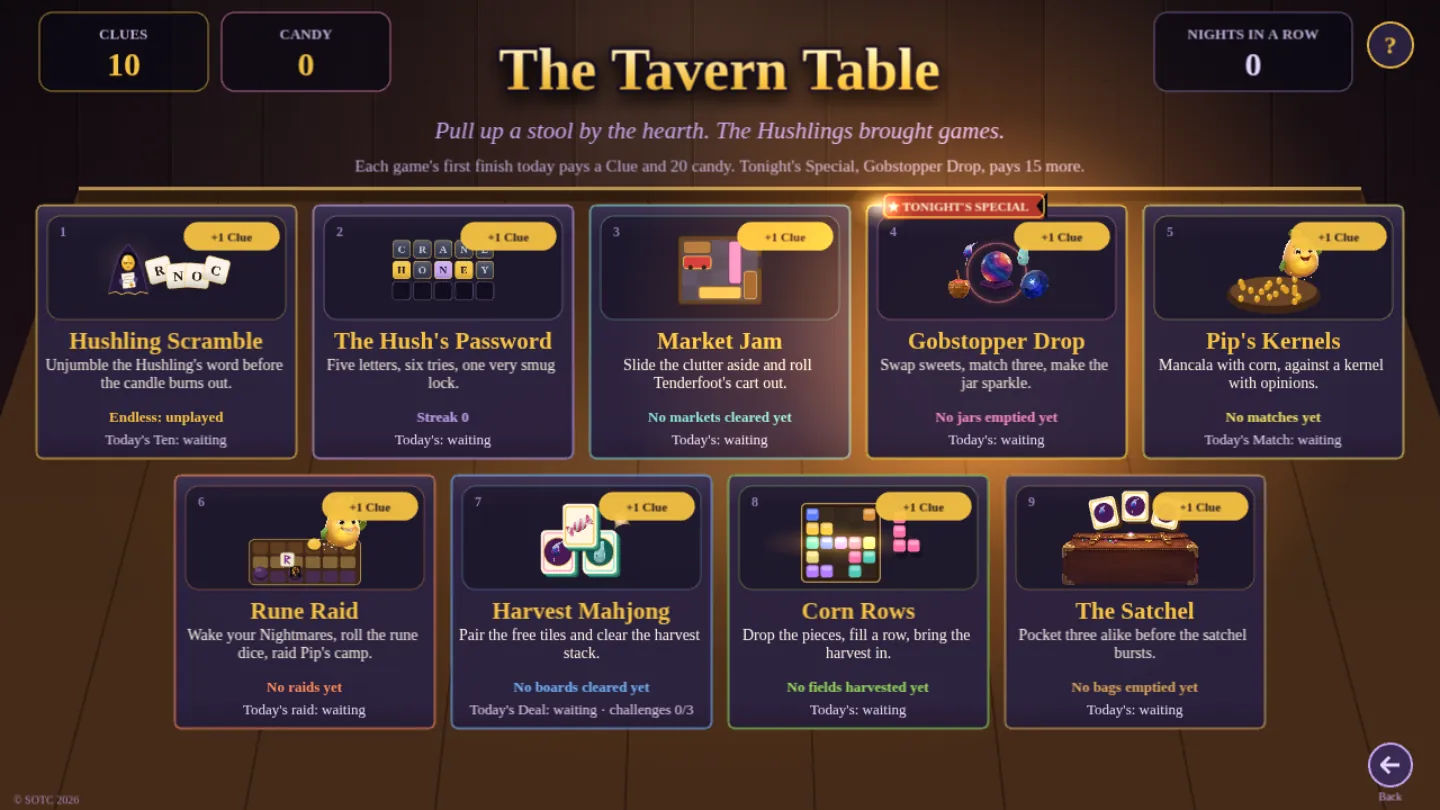
The village tavern and its growing shelf of casual games, each one quick enough for a break. Pip is dealing.
Words. Hushling Scramble (beat the candle), The Hush's Password (five letters, six tries) and Lantern Road: trace words on a dark field of letters to light a road across it, in a road of the day or a race against Pip.
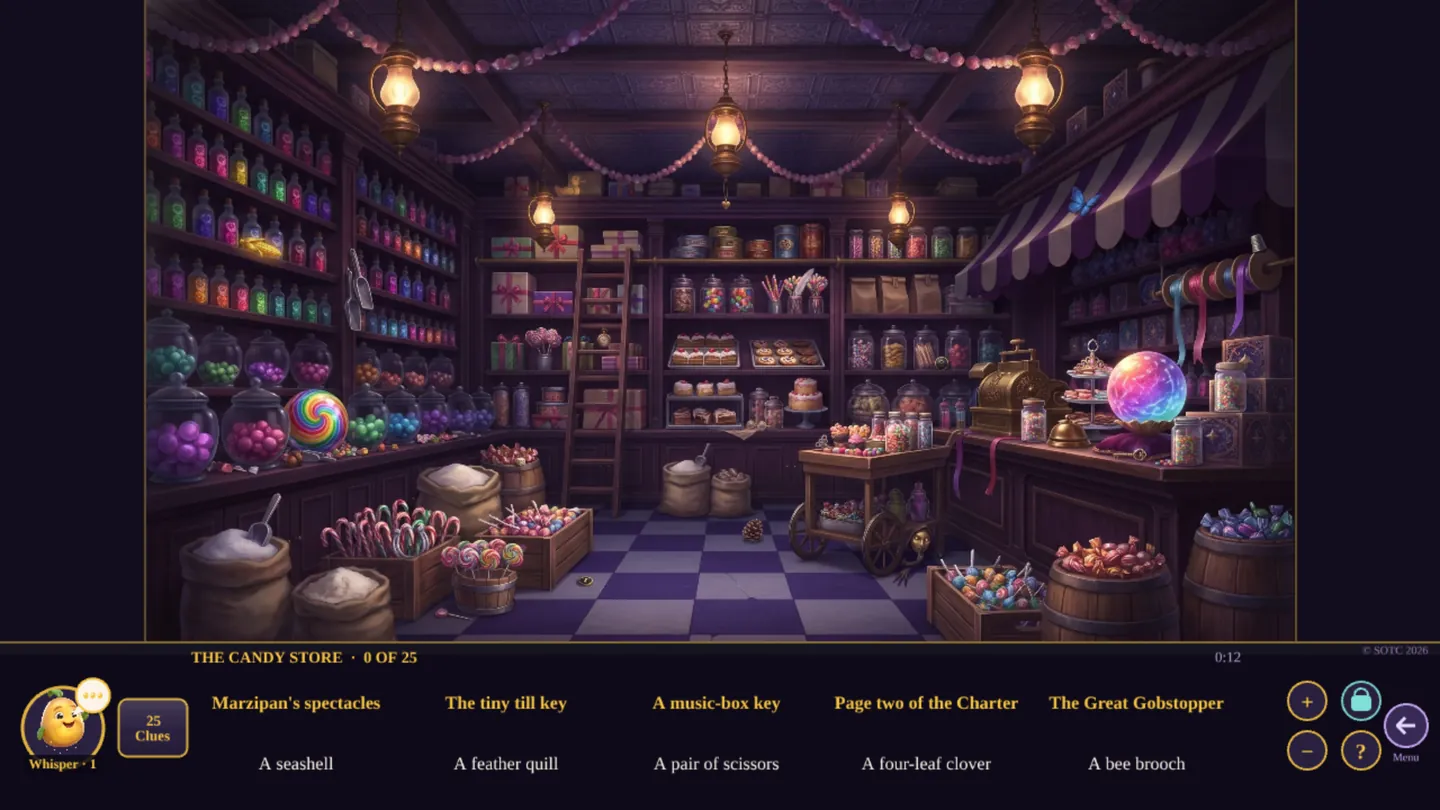
Puzzles. Market Jam (free the cart) and Gobstopper Drop (swap sweets, match three).
Against Pip. Rune Raid (rune dice) and Pip's Kernels (mancala with corn), on the table's second page.
Tiles. Harvest Mahjong: four setups to pick from, a deal of the day and three daily challenges.
Blocks. Corn Rows: drop pieces on an 8 by 8 field and fill rows and columns to clear them, with a field of the day that deals everyone the same pieces.
Triples. The Satchel: tap free tiles into a satchel of seven pockets, and three alike pop out. Empty the table before the pockets fill, with three bags to pick from and a bag of the day.
Sorting. Jar Jumble: pour the sweets from jar to jar until every jar holds one colour, with three shelves to pick from, a ladder of levels and a shelf of the day.
Rewards. The first finish of each game every day pays a Clue for Tenderfoot's Folly. Signed in, it also pays a little candy (essence on the Horde) from the tip jar, and so does each Mahjong challenge.
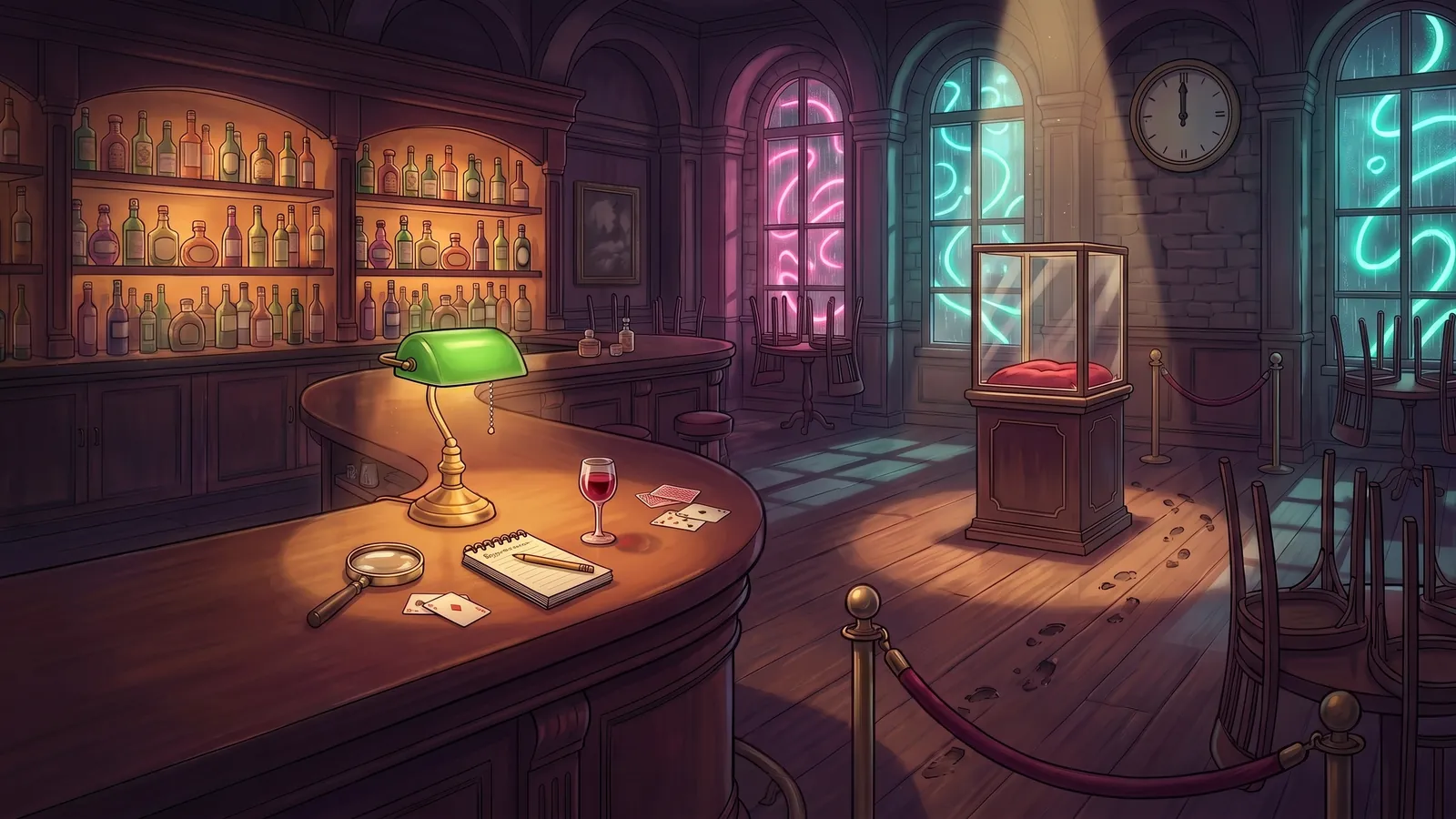
Every night at closing time something goes missing at the Gilded Hush, and one of them is lying. Find the lie before the bar shuts.
One case a night. A new case opens every night at 00:00 UTC, the same case for everyone.
The suspects. Tonight's are drawn from a cast of twenty seven, villagers and the casino's own, Silk among them, each with an alibi in their own words.
Pin it. Work the Places, the Suspects and your Notebook, then pin the liar. The answer is never in the page: the server judges every pin, so the board stays honest.
For grown-ups. For players 16 and over, signed in or as a guest.
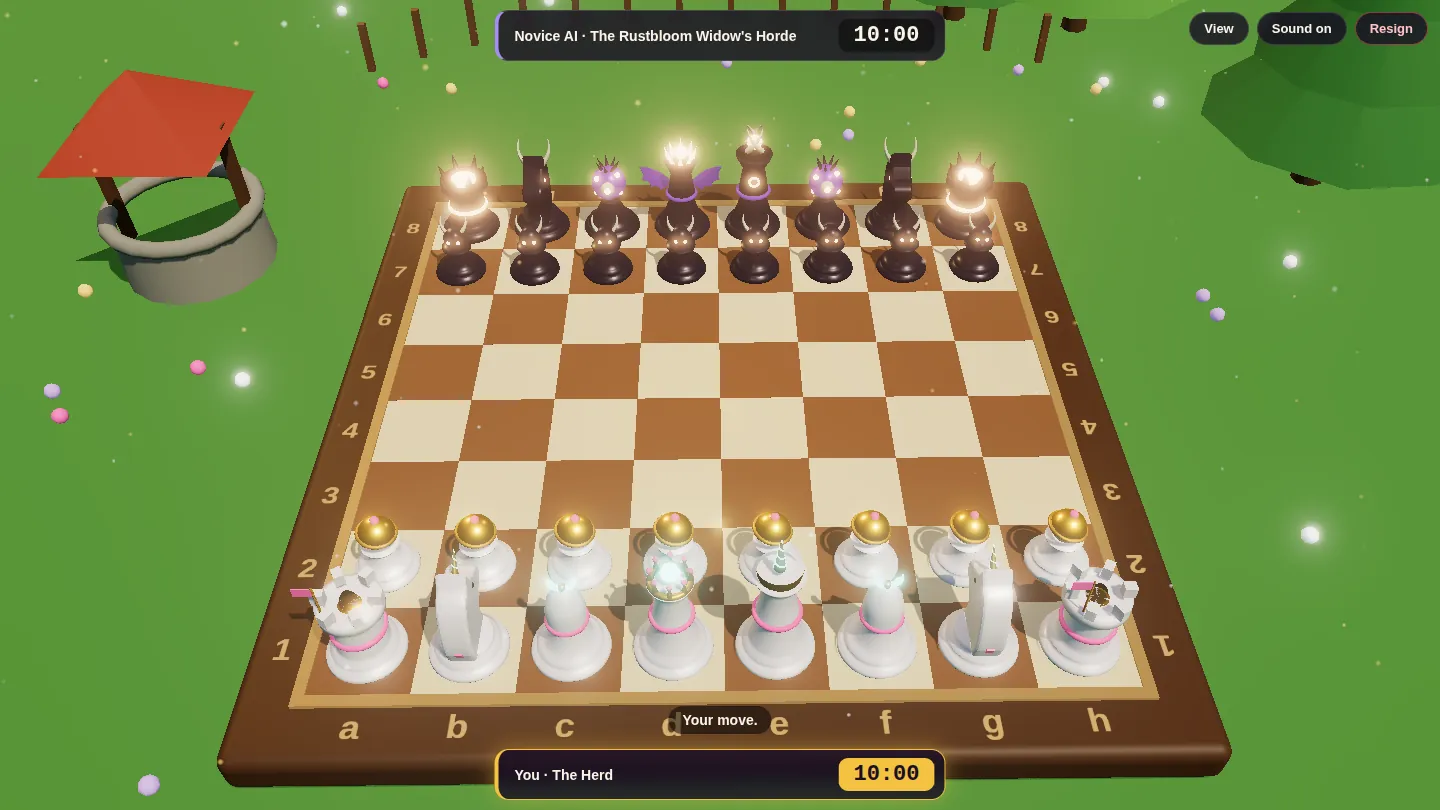
Real chess, every standard rule, on a 3D board: the Herd against the Horde, and every capture plays out as a
short fight.
The armies. The Herd plays Volunteers, Star and Moon Unicorns and Bell Wagons; the Horde plays Grunts, Dreadhoofs, Choirlings, Battering Rams and a Dragon for a queen, in its god's colours.
Two clocks. Standard, ten minutes a side, or Bullet, one minute a side.
Six levels of AI. Newcomer, Beginner, Novice, Average, Skilled and Pro, each showing its approximate rating, from about 250 to 1900 and up. A win pays more the higher the level (candy on the Herd, essence on the Horde), up to a daily limit.
Boards. The Village Green is free; ten more are for sale, from The Candy Counter to The Last Bright Field.
Challenges and badges. Three daily and three weekly challenges that pay when claimed, and badges for the trophy case on your profile.
A blight is loose in the corn. Read the night's weather, work the field so it finds nothing to take, and grow the cure from the plants that shine.
Turned around. You never spread anything. The blight travels by its own rules; you read tomorrow's forecast and take away what it needs.
The season. One season to bring the corn in, with eight tools against four strains, across fifty fields in five regions, plus a Quick Season and puzzles.
The cure. It hides in the blight's own path, in the plants that shine. The Almanac's cards and the Harvest Moon help.
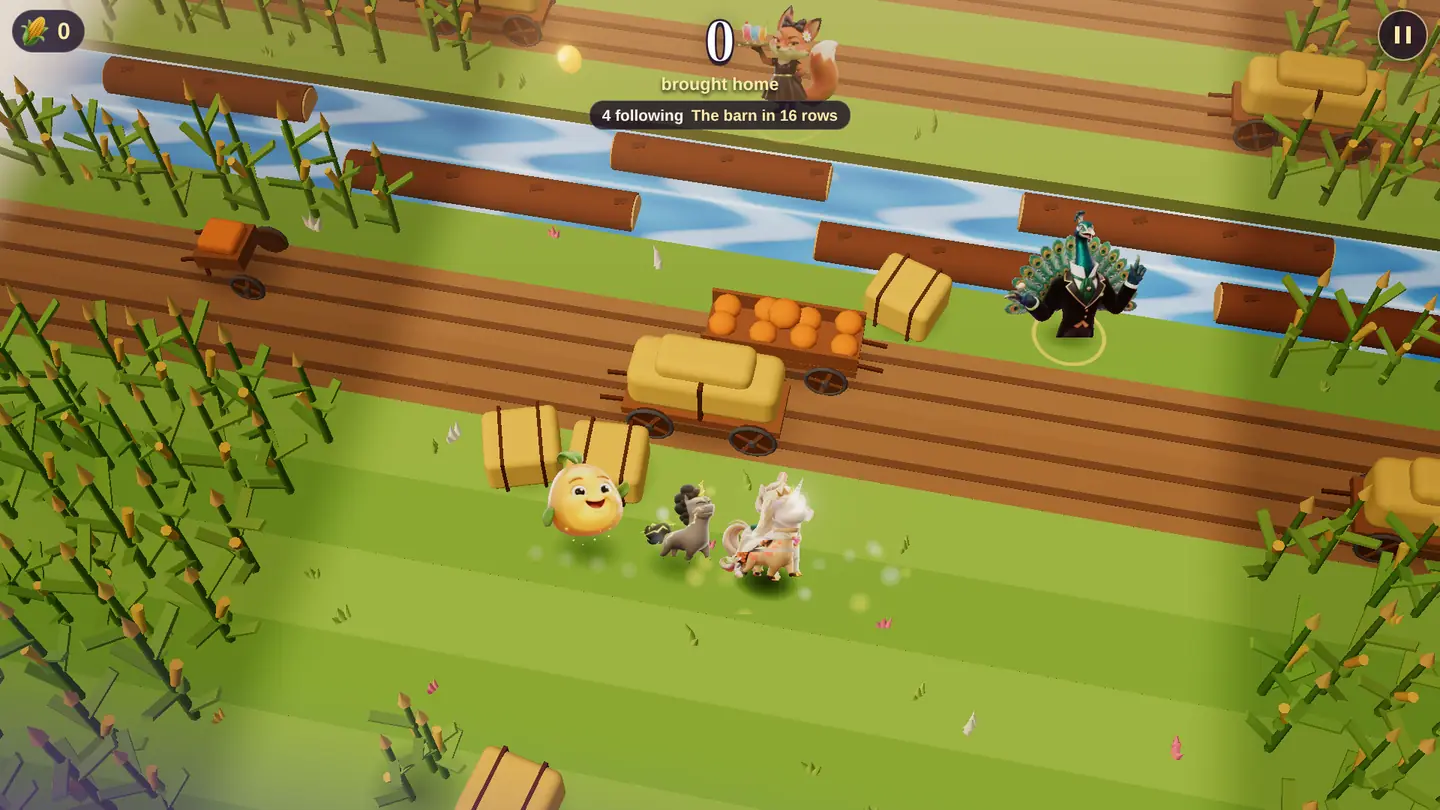
Folk of the series are stranded out in the corn as night falls. Gather them into a line that follows your
footsteps, and lead them all home to the barn: tap to hop ahead, swipe to hop left, right or back.
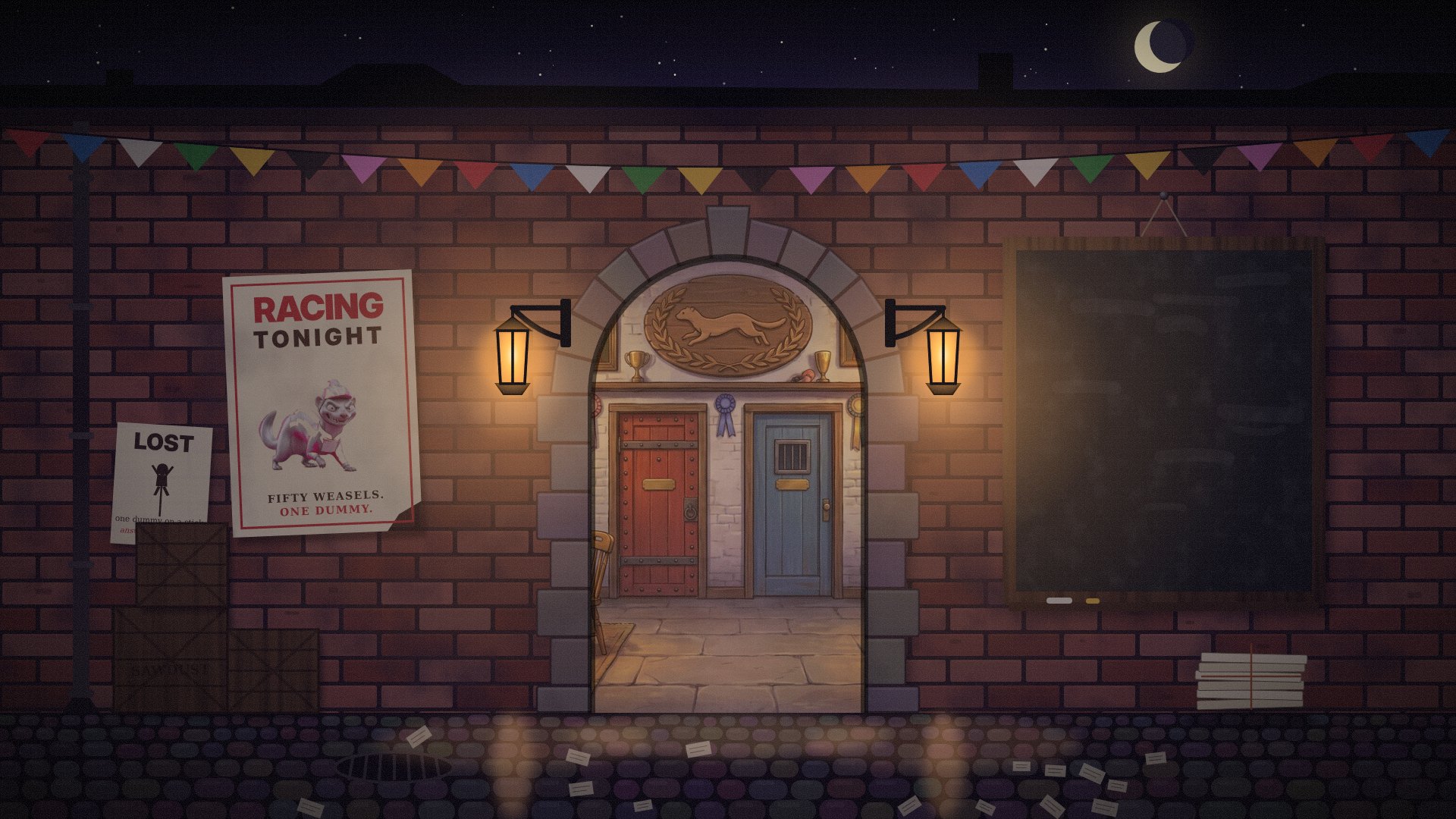
The rows. Grass with hay bales and scarecrows in the way, roads where carts roll both ways, the river where you ride the logs, and the weasel track, where the lamps flash before the pack thunders through.
The line. Hop onto someone stranded and they fall in behind you. Each one hops to where the one ahead of them stood, so a cart that missed you can still catch them: time your hops for the whole line. Every 22 rows the barn (the Horde's burrow) takes the whole line in, and that is your score.
The dark. Night follows you. Stand still too long, or hop back too far, and it takes the back of your line first, then you.
The lineup. Start as Pip. The kernels you pick up add up over every crossing and open the next hopper on your side's ladder: Barnaby, the Gilded Hush's cast, and the Herd's unicorns or the Horde's creatures. A few are won by feats instead.
Nothing to buy. No currency and no shop: every hopper is opened by playing.
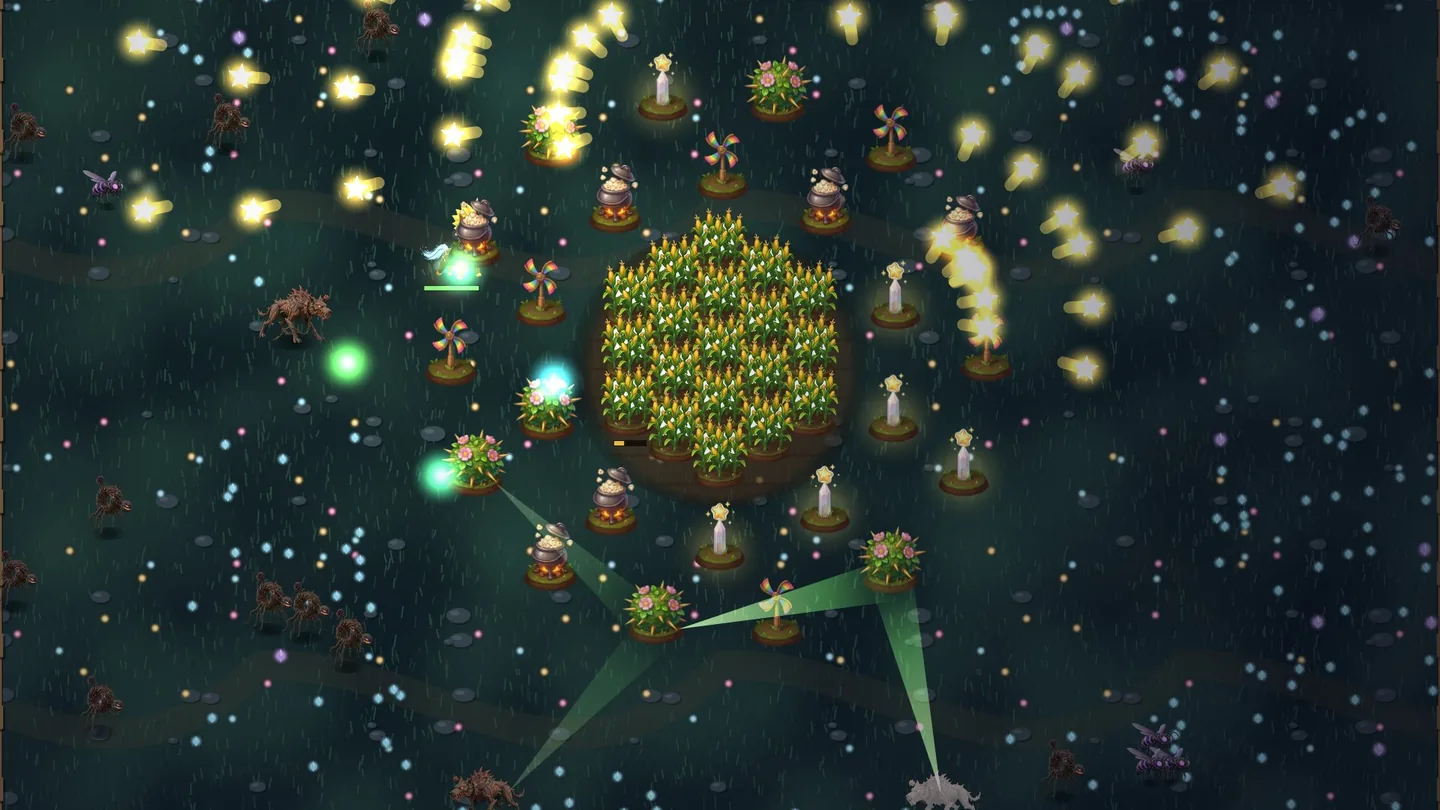
Keep your side's corn standing from nine at night until dawn. You carry no weapon: stand still to plant, and
every planting fires on its own and stands in the foes' way.
The corn. Nineteen hills grow in the middle of a fenced field, and most foes come over the fence for them. Tend your hurt plantings, sow trampled hills again, and lead the hunters through your plantings. Lose the last hill and the night is lost.
The night. Foes come thicker by the hour. A champion comes for you at midnight and another at three, and the night's boss at five goes for the corn until you turn it. Beat the boss and the sun comes up: the corn still standing is your harvest.
Growing stronger. Every foe drops a spark, for seeds and growth. Fill the bar to level up and pick one of three: a new kind to plant, a level for a kind (every planting of it grows), or a charm. Champions drop chests, and a kind at its top level with its matching charm wakes up in the next chest.
Ten nights a side. The Herd holds out against the ten gods of the Horde; the Horde is hunted by ten companies of the Herd. Win a night to open the next.
The heroes. Fourteen a side. Every foe you defeat adds to your total and opens the next hero on your side's ladder; five more are won by a feat in one night.
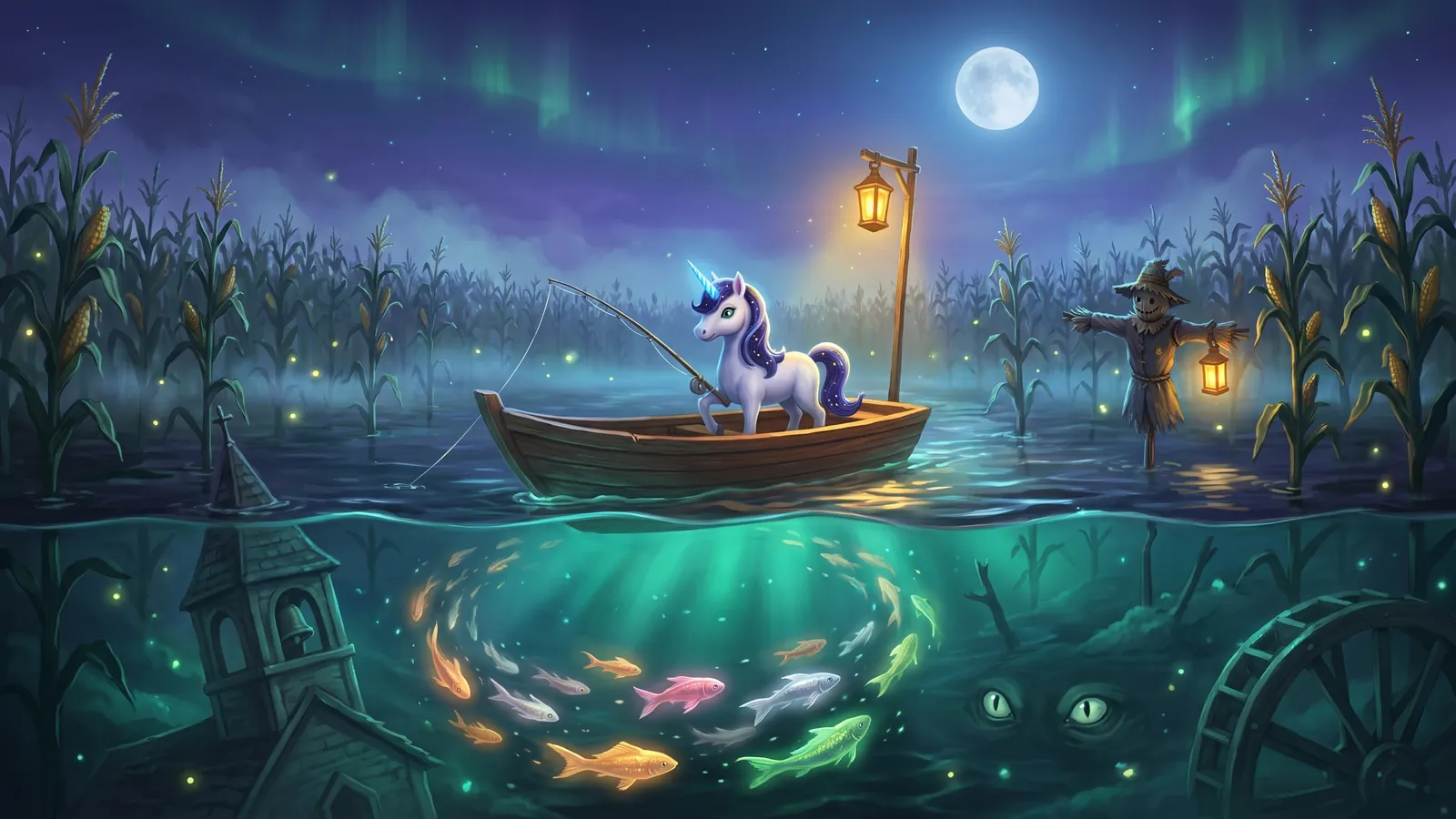
Pole a punt over the flooded corn by night with a lantern and a cohort aboard, and fish by the colour of your light.
Flood nights. The Sump Below rises under the cornfields, the drowned rows glow with mirelight, and you push off at eight to be home before the water drains at five.
The lake. Seven reaches and twenty eight spots, each with its own fishing holes, and forty nine kinds of fish to find, seven of them Old Ones.
The company. Jeb Purdy, an old possum, and the rest of the cast, in a story of twelve chapters told on the water.
Aim the weasels' brass cannon and pop clumps of slimelings and other Horde monsters out of the sky.
The quest road. Eight chapters of fifteen levels on the painted map, a rescue at five and ten and a boss at the end of each.
It climbs. Every chapter brings a new monster or a new twist: sinking clumps, sticky slime, ice and stones, singing bubbles, fog and fuses, and brood sacs that hatch.
The crew. Captain Nibs, Pockets and Squeak, hired by the Slime Matron to cart her runaway brood home. Every level won pays Candy once.
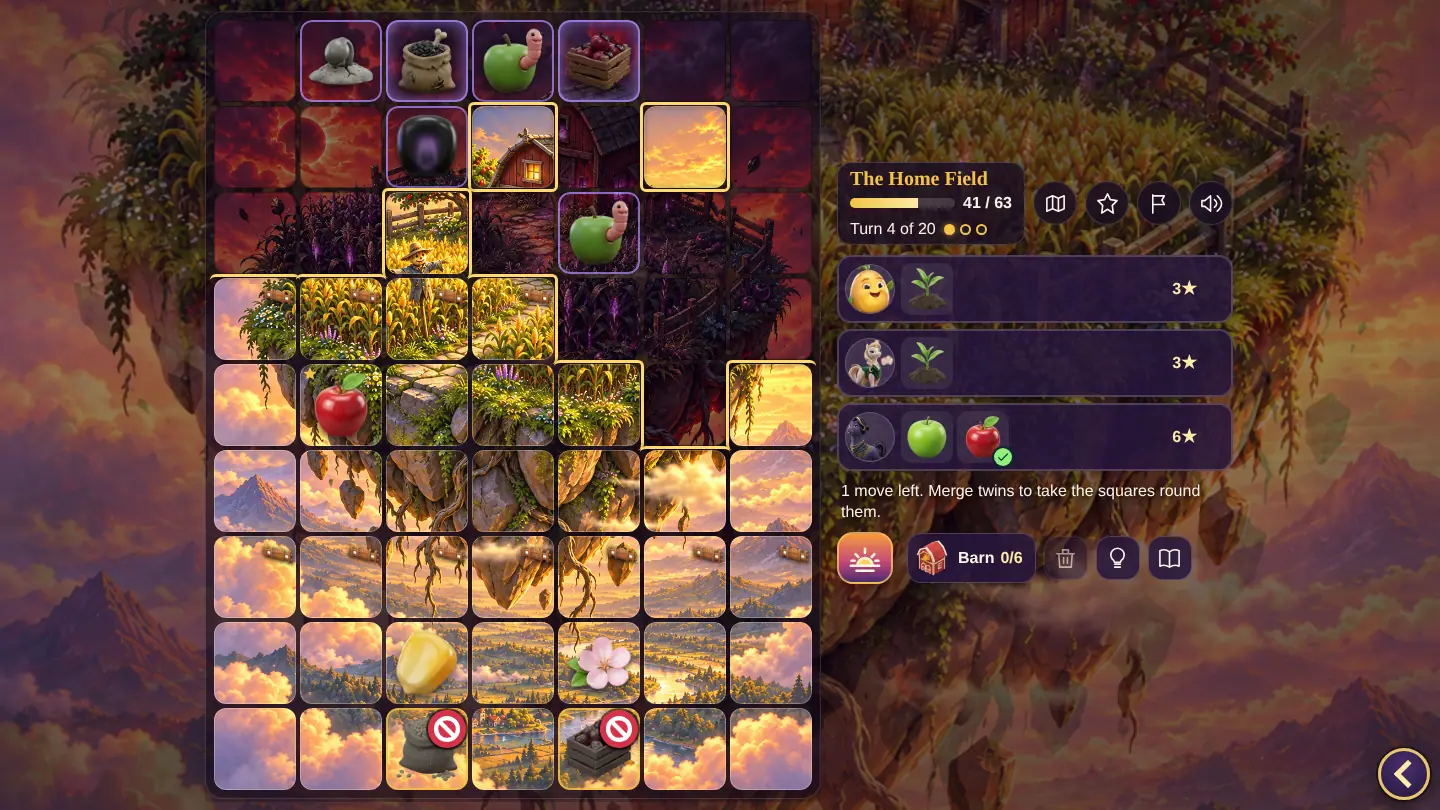
The drifting islands above the village, split between you and their keeper. Take them back square by square:
three moves a turn, twenty turns, and every merge at the border claims the ground round it.
The duel. You start with the bottom four rows; the host holds the rest. Tap a producer, move a piece or merge two: a step 2 merge takes the four squares beside it, a step 3 all eight round it, and on up. Hold the whole island to win at once, or the most of it after twenty turns.
Raids. Move a piece onto their ground and merge its twin there. A piece left on the other side's ground withers a step each turn, and a producer standing on it is overrun.
The orders. Three of the village folk at a time. Serving one is free, pays stars and strikes: the host loses squares at the front, more for a bigger order, its pieces there are knocked down, and a fence goes up on the struck row for three turns.
Your turn. End it with the sunset beside the barn. Give a round up from the flag for a fresh board; a lost round still pays a consolation, and the winner takes the whole screen: HERD WINS or HORDE WINS.
Two sides. The Herd takes the islands back from the Harvest Witch; the Horde spreads the blight against Farmer Fenn.
The islands. Seven, each with its own power. The first is free, two are earned by play, and the other four are island packs, bought once and kept for good. The Bigger Barn and the barn looks are for sale too; neither is needed to win an island.
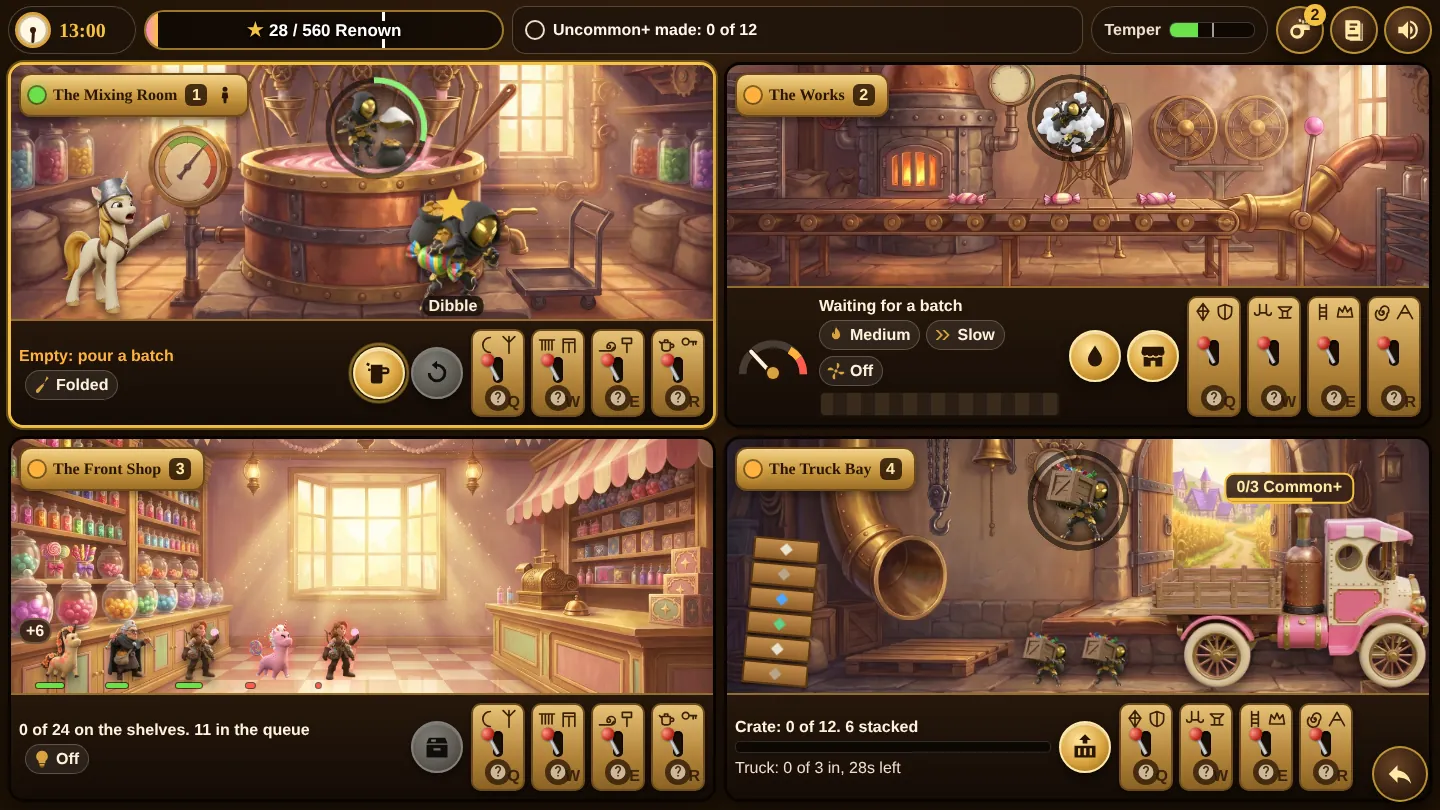
Tenderfoot signed for a whole candy works, and the Hushlings came with it. Four rooms built by gnomes and
dwarves, a crew that always adds one more, and switches nobody ever labelled.
Four rooms. The Mixing Room pours the batches, the Works makes the sweets, the Front Shop sells them and the Truck Bay ships them. On a computer you see them all; on a phone, one at a time with the others' lamps along the foot.
Rarity pays. Two flavours, a mix-in, a filling, the mix and the Works' settings name each batch: plain, common, uncommon, rare or epic. The common to rare recipes are the same in every works; your eight epics are yours alone.
The crew. A lamp goes amber when a Hushling adds one more scoop or one more log: walk there and hold the trouble to fix it. Catch them at their capers for verses of the Ballad and scraps of the builders' notes.
Two works. The Herd run it by day with Tenderfoot and Pip; the Horde by night with Hushaby. Nothing to buy: Renown only goes up, and climbs the Ladder.
Sign in once and every game knows you. Your side follows you through every door, and your candy (essence on
the Horde) carries across: win it in one game, spend it in another. Every season is named for a Nightmare god,
and every wave held, boss put down, bout won and Gate match won scores for your side on the Season's bar.

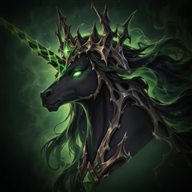 The Hollow SovereignWho Rules An Empty Room
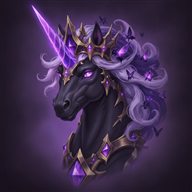 The Swarm-MotherWho Is Always Already Here
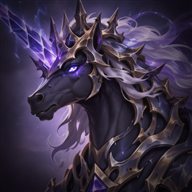 The Ironclad TyrantWho Does Not Do Subtle
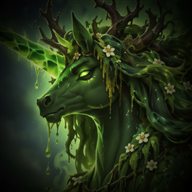 The Sump BelowWhich Is Still Arriving
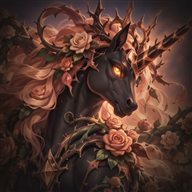 The Rustbloom WidowWho Grows Her Problems
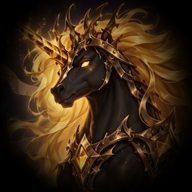 The Gilded HushWho Charges For Silence
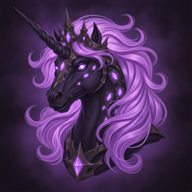 The Nine-Eyed ChoirWhich Has Heard About You
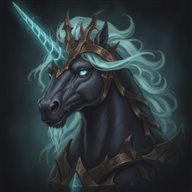 The Frostbitten BellWhich Rings Before The Cold
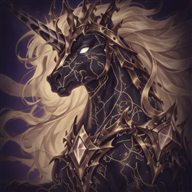 The Crooked CartographerWho Draws The Road You Take
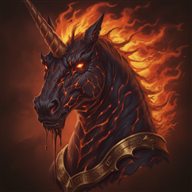 The Ember GluttonWhich Is Still Hungry, Thank You For Asking
 Plays for candy
 Plays for essence
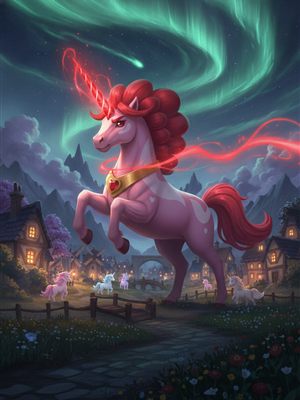 Heart unicorn
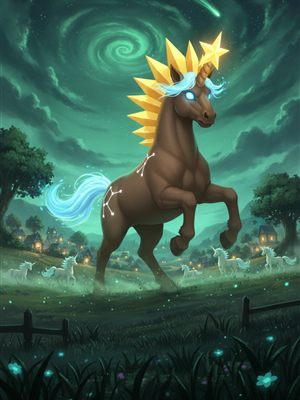 Star unicorn
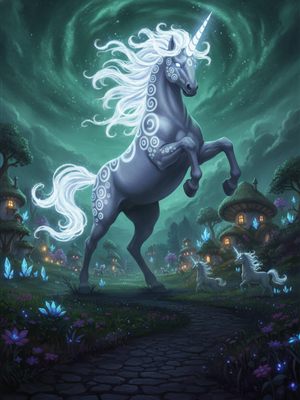 Moon unicorn
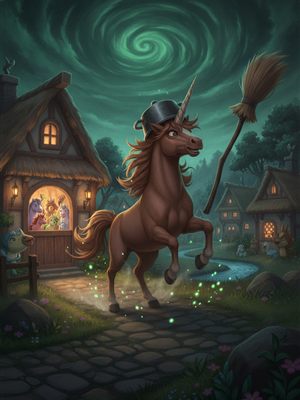 Village Volunteer
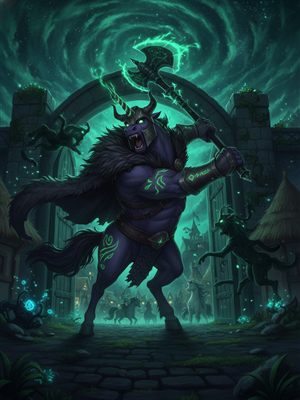 The Barbarian
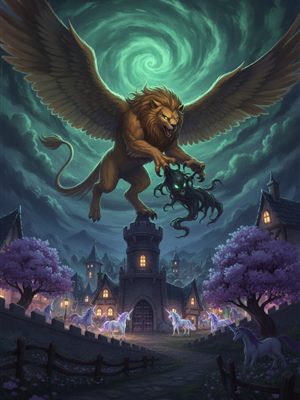 The Griffin
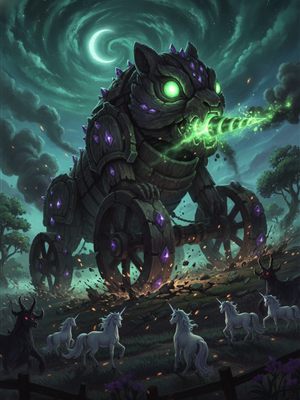
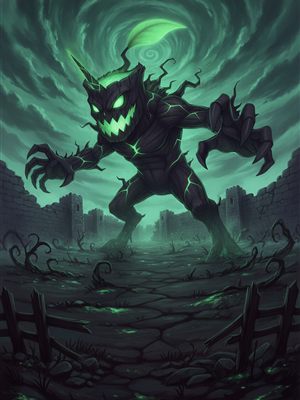 Shade SproutThe Hollow Sovereign
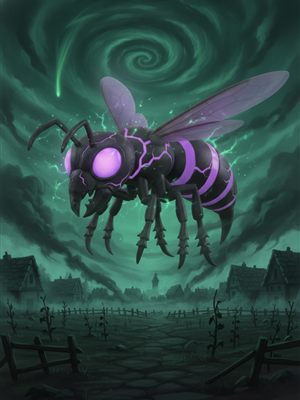 NightbuzzerThe Swarm-Mother
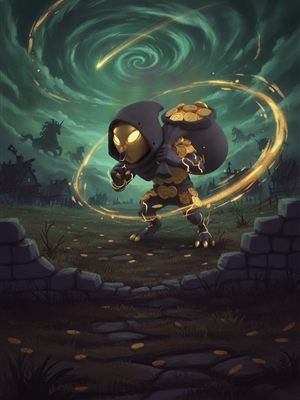 HushlingThe Gilded Hush
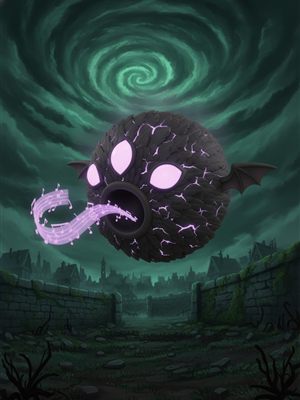 ChoirlingThe Nine-Eyed Choir
 CinderhoundThe Ember Glutton
 DreadhoofThe Ironclad Tyrant
 Brannockthe Barrel-Thrower Common
 Old Hobthe Sergeant Common
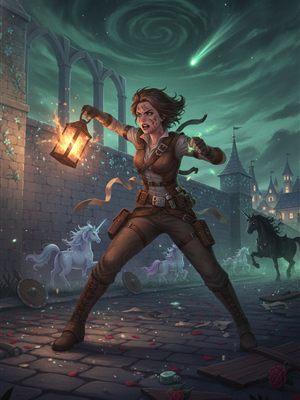 Piper Hallowaythe Field Medic Champion
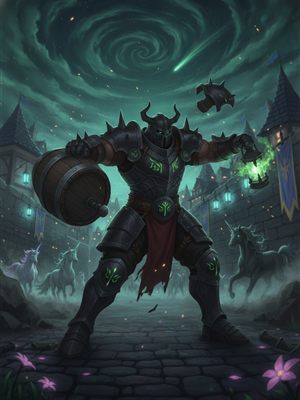 Dunmore Ironbellythe Wall Champion
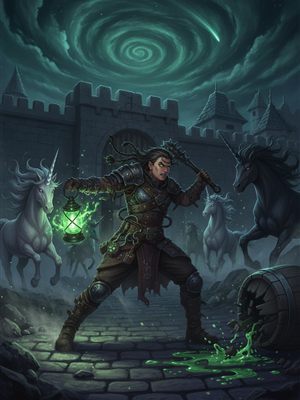 Ravenna Blackhornthe Warcaller Hero
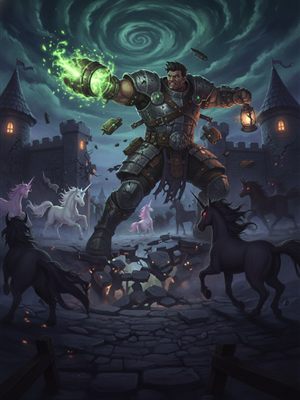 Thorvald Sunderthe Earthshaker Hero